Tesla Repair Cost Guide: Dealer vs DIY Prices (2026)
Tesla service centers are convenient, but they're not cheap. A simple brake pad swap can run $300-500 at the dealer when you can do it yourself for $50-80 in parts. Multiply that across every maintenance item and repair over your ownership period, and DIY saves you thousands.
This guide breaks down what every major Tesla repair costs at the dealer versus doing it yourself, along with difficulty ratings and links to our step-by-step guides.
How to Use This Guide
- Dealer Cost = typical Tesla Service Center or third-party shop price (parts + labor)
- DIY Cost = parts only, sourced online
- Difficulty = Easy (no experience needed), Intermediate (basic tools + some confidence), Advanced (significant mechanical skill)
- All prices are approximate and vary by region and model
💡 Before you start any repair: Check out our Tesla jack points and lifting guide for safe lifting procedures. Many repairs below require getting under the car.
🛞 Brakes
Teslas use regenerative braking, so brake components last much longer than gas cars—but they still wear out eventually. These are some of the most rewarding DIY jobs because the dealer markup on labor is huge.
| Repair | Dealer Cost | DIY Cost | Difficulty | Guide |
|---|---|---|---|---|
| Brake pad replacement | $300–500 | $50–80 | Intermediate | Guide |
| Brake rotor replacement | $500–900 | $150–250 | Intermediate | Guide |
| Brake fluid change | $100–200 | $20–40 | Intermediate | Guide |
| Rear caliper motor (Model S) | $800–1,200 | $200–400 | Advanced | Guide |
| Squeaky brakes diagnosis | $100–150 | $0–20 | Easy | Guide |
| Regen braking reduced | $0–200 | $0 | Easy | Guide |
Bottom line: Brake work is where DIY shines. You'll save 60-80% on every job, and the skills transfer across all models.
🔧 Suspension
Suspension work ranges from straightforward bolt-on jobs to more involved repairs. Even the harder jobs are doable in a home garage with the right tools.
| Repair | Dealer Cost | DIY Cost | Difficulty | Guide |
|---|---|---|---|---|
| Shock/strut replacement (suspension) | $600–1,200 | $150–350 | Advanced | Guide |
| Control arm replacement | $600–1,000 | $100–250 | Intermediate | Guide |
| Sway bar link replacement | $300–500 | $40–80 | Intermediate | Guide |
| Wheel bearing replacement | $500–900 | $100–200 | Advanced | Guide |
| Tie rod end replacement | $400–700 | $60–120 | Intermediate | Guide |
| Wheel alignment (DIY method) | $100–200 | $30–50 | Intermediate | Guide |
| Air suspension issues (Model S/X) | $1,000–3,000 | $200–800 | Advanced | Guide |
| Suspension noise diagnosis | $100–200 | $0–30 | Easy | Guide |
| Creaking & rattling fix | $100–300 | $0–20 | Easy | Guide |
| Half shaft replacement (Model X) | $1,200–2,000 | $300–500 | Advanced | Guide |
Bottom line: Suspension repairs have some of the biggest dealer markups. A shock/strut job that costs $1,000+ at Tesla can be done for $200-300 in your garage.
🔋 Battery & Charging
Battery and charging issues range from simple 12V swaps to diagnosing phantom drain. The 12V battery is the single most common Tesla repair—and one of the easiest.
| Repair | Dealer Cost | DIY Cost | Difficulty | Guide |
|---|---|---|---|---|
| 12V battery replacement | $200–400 | $50–100 | Easy | Guide |
| Charge port stuck/latch fix | $200–500 | $20–80 | Intermediate | Guide |
| Phantom battery drain fix | $100–300 | $0 | Easy | Guide |
| Range loss diagnosis | $0–200 | $0 | Easy | Guide |
| Slow charging diagnosis | $100–200 | $0 | Easy | Guide |
| Mobile connector issues | $100–200 | $0–50 | Easy | Guide |
| Supercharger slow diagnosis | $0 | $0 | Easy | Guide |
Bottom line: Most battery and charging issues are software or configuration problems that cost nothing to fix. The 12V battery swap is a 15-minute job that saves $150-300.
❄️ HVAC
Tesla's HVAC system is more complex than traditional cars, especially models with heat pumps. But many common fixes—like the cabin filter—are dead simple.
| Repair | Dealer Cost | DIY Cost | Difficulty | Guide |
|---|---|---|---|---|
| Cabin air filter replacement | $75–150 | $20–50 | Easy | Guide |
| AC not cooling diagnosis | $150–500 | $0–50 | Easy–Intermediate | Guide |
| Heat pump problems | $500–2,000 | $50–300 | Intermediate–Advanced | Guide |
| Coolant flush/change | $200–400 | $30–60 | Intermediate | Guide |
| Superbottle replacement | $1,000–2,500 | $400–800 | Advanced | Guide |
| Climate Keeper issues | $0–200 | $0 | Easy | Guide |
Bottom line: Start with the cabin filter—it's the easiest maintenance item on the car. For AC issues, our diagnostic guides can save you from unnecessary service visits.
🎨 Exterior
Cosmetic repairs are where Tesla owners get hit hardest. Paint correction, PPF, and ceramic coating are expensive services—but many can be DIY'd with patience and the right products.
| Repair | Dealer Cost | DIY Cost | Difficulty | Guide |
|---|---|---|---|---|
| Paint chip repair | $200–500 | $20–50 | Easy | Guide |
| Ceramic coating | $800–2,000 | $50–100 | Intermediate | Guide |
| PPF installation | $2,000–6,000 | $300–800 | Advanced | Guide |
| Curb rash wheel repair | $200–400/wheel | $30–60 | Intermediate | Guide |
| Panel gap adjustment | $0–300 | $0 | Easy–Intermediate | Guide |
| Headlight replacement | $500–1,200 | $200–500 | Intermediate | Guide |
| Headlight condensation fix | $0–500 | $0–20 | Easy | Guide |
| Tail light replacement | $300–600 | $100–250 | Easy | Guide |
| Side mirror replacement (Model 3) | $400–700 | $100–200 | Intermediate | Guide |
| Mud flaps installation | $100–200 | $30–60 | Easy | Guide |
| Roof trim replacement (Model 3) | $200–400 | $50–100 | Easy | Guide |
| Windshield wiper replacement | $50–100 | $15–30 | Easy | Guide |
| Roof rack installation | $200–400 | $150–350 | Easy | Guide |
Bottom line: Ceramic coating is the biggest DIY win here—you can save $1,500+ doing it yourself. Paint chip repair is also a no-brainer DIY job.
🧹 Interior
Interior work on Teslas is mostly cosmetic and electronic. The screen and MCU upgrades are the most impactful repairs in this category.
| Repair | Dealer Cost | DIY Cost | Difficulty | Guide |
|---|---|---|---|---|
| MCU/touchscreen upgrade | $1,500–2,500 | $500–1,000 | Advanced | Guide |
| Interior cleaning & detailing | $200–500 | $30–80 | Easy | Guide |
| Seat heater fix | $300–800 | $50–150 | Intermediate | Guide |
| Ambient lighting install | $200–500 | $50–100 | Intermediate | Guide |
| Screen protector install | $50–100 | $15–30 | Easy | Guide |
| Steering wheel button fix | $200–500 | $30–80 | Intermediate | Guide |
Bottom line: The MCU upgrade is a big-ticket item where DIY saves $1,000+. Interior detailing and screen protectors are easy wins.
🪟 Windows & Doors
Window and door issues are common across all Tesla models. Most fixes are straightforward once you know the process.
| Repair | Dealer Cost | DIY Cost | Difficulty | Guide |
|---|---|---|---|---|
| Window calibration/reset | $0–100 | $0 | Easy | Guide |
| Window regulator replacement | $400–800 | $80–150 | Intermediate | Guide |
| Door handle not working | $300–700 | $50–150 | Intermediate | Guide |
| Door seal maintenance | $50–200 | $10–30 | Easy | Guide |
| Falcon Wing door fix (Model X) | $500–2,000 | $50–300 | Intermediate–Advanced | Guide |
| FW door window replacement (Model X) | $600–1,200 | $150–300 | Advanced | Guide |
| Frunk won't open | $100–400 | $0–20 | Easy | Guide |
| Frunk strut replacement | $100–200 | $20–40 | Easy | Guide |
| Trunk won't close | $100–500 | $0–50 | Easy | Guide |
Bottom line: Window calibration is free and takes 30 seconds—always try this before paying for service. Door handle repairs save $200-500.
🛞 Wheels & Tires
Wheel and tire maintenance is essential for range, safety, and ride quality. All of these are very doable at home.
| Repair | Dealer Cost | DIY Cost | Difficulty | Guide |
|---|---|---|---|---|
| Tire rotation | $50–100 | $0 | Easy | Guide |
| TPMS sensor replacement | $200–400 | $50–100 | Intermediate | Guide |
| Aero cap removal/install | $0 | $0 | Easy | Guide |
| Wheel alignment (DIY) | $100–200 | $30–50 | Intermediate | Guide |
| Gear oil change | $200–400 | $30–60 | Intermediate | Guide |
| Winter preparation | $200–500 | $50–200 | Easy–Intermediate | Guide |
Bottom line: Tire rotation is the easiest maintenance item you can do—zero cost if you already have a jack. Don't pay $100 for something that takes 30 minutes.
📱 Software & Connectivity
Many Tesla "problems" are actually software issues with free fixes. Before booking a service appointment, check these guides first.
| Repair | Dealer Cost | DIY Cost | Difficulty | Guide |
|---|---|---|---|---|
| Screen black/unresponsive | $0–1,500 | $0 | Easy | Guide |
| Software update stuck | $0–100 | $0 | Easy | Guide |
| Bluetooth issues | $0–200 | $0 | Easy | Guide |
| LTE connectivity issues | $0–200 | $0 | Easy | Guide |
| Navigation not working | $0–200 | $0 | Easy | Guide |
| Phone key not working | $0–100 | $0 | Easy | Guide |
| Key fob battery replacement | $30–50 | $3–5 | Easy | Guide |
| Voice commands not working | $0–100 | $0 | Easy | Guide |
| USB not working | $0–100 | $0–20 | Easy | Guide |
| HomeLink programming | $0–100 | $0 | Easy | Guide |
Bottom line: Almost every software and connectivity issue is fixable with a reboot or settings change. Never pay for a service visit before trying our free troubleshooting guides.
📷 Cameras & Sensors
Tesla's camera and sensor suite is critical for Autopilot, parking, and dashcam functionality. Some repairs require calibration, but many issues have simple fixes.
| Repair | Dealer Cost | DIY Cost | Difficulty | Guide |
|---|---|---|---|---|
| Autopilot camera calibration | $0–200 | $0 | Easy | Guide |
| Dashcam USB setup | $0–50 | $10–30 | Easy | Guide |
| Dashcam not saving | $0–200 | $0–30 | Easy | Guide |
| Rear camera blurry | $200–500 | $0–20 | Easy | Guide |
| Parking sensor replacement | $300–600 | $50–100 | Intermediate | Guide |
| Sentry mode not recording | $0–200 | $0–30 | Easy | Guide |
| Autopilot unavailable | $0–500 | $0 | Easy | Guide |
| Phantom braking fix | $0–200 | $0 | Easy | Guide |
| Dashcam USB formatting | $0 | $0–30 | Easy | Guide |
Bottom line: Most camera and sensor issues are software-related. A simple calibration drive or USB format often solves the problem for free.
Total Savings Potential
To put it in perspective, here's what a typical Tesla owner might spend over 5 years on common maintenance and repairs:
| Dealer/Shop | DIY | Savings | |
|---|---|---|---|
| Brake pads (1x) | $400 | $65 | $335 |
| Cabin filter (2x) | $250 | $60 | $190 |
| 12V battery (1x) | $300 | $75 | $225 |
| Tire rotation (5x) | $400 | $0 | $400 |
| Wiper blades (3x) | $180 | $60 | $120 |
| Interior detail (3x) | $900 | $150 | $750 |
| Ceramic coating (1x) | $1,200 | $75 | $1,125 |
| Misc software fixes | $300 | $0 | $300 |
| Total | $3,930 | $485 | $3,445 |
That's over $3,400 saved on routine items alone. Add in a suspension repair or MCU upgrade and you're looking at $5,000-8,000 in savings over your ownership period.
Where to Buy Parts
For Tesla-specific parts and tools, check our Tesla parts buying guide for Europe which covers the best suppliers, OEM vs aftermarket quality, and shipping tips.
Top sources:
- Tesla Online Shop — OEM parts, sometimes overpriced
- Amazon — Wide selection, fast shipping, easy returns
- eBay — Good for used OEM parts
- AliExpress — Budget options, longer shipping
- RockAuto — Great for brake and suspension parts
- EVANNEX / Abstract Ocean — Tesla-specific accessories
Before You Start
- Get the right tools. A basic toolkit, floor jack, and jack stands cover 80% of the repairs on this page. See our tool recommendations at the top.
- Know your model year. Parts and procedures vary between Model 3/Y and Model S/X, and even between production years.
- Put the car in Jack Mode. Always enable Jack Mode in the service menu before lifting your Tesla. Our lifting guide covers this.
- Start easy. If you've never worked on a car, begin with cabin filter, tire rotation, or wiper blades. Build confidence before tackling brakes or suspension.
- Document everything. Take photos before and during disassembly. Your future self will thank you.
💡 Bookmark this page. We update costs and add new guides regularly. This is your one-stop reference for Tesla repair costs and DIY savings.
Related Guides
- Tesla Dent Repair: PDR, DIY Methods & Cost Guide — Medium · Exterior
- Tesla Battery Replacement Cost: What It Really Costs in 2025 — Informational · Model 3, Model Y, Model S, Model X · Battery & Electrical
- Tesla FSD in Europe: What You Need to Know (2026 Guide) — Easy · Software
- Where to Buy Tesla Parts in Europe (2026 Guide) — Reference · Guides
- Tesla Model 3 Superbottle Replacement: What It Is, Symptoms & Cost (2025 Guide) — Hard · Model 3 · Cooling System
- Tesla Vinyl Wrap: Colors, Cost & DIY Installation Guide — Hard · Exterior
- Tesla Coolant Valve Replacement: DIY Guide — Advanced · Model 3, Model Y · Cooling System
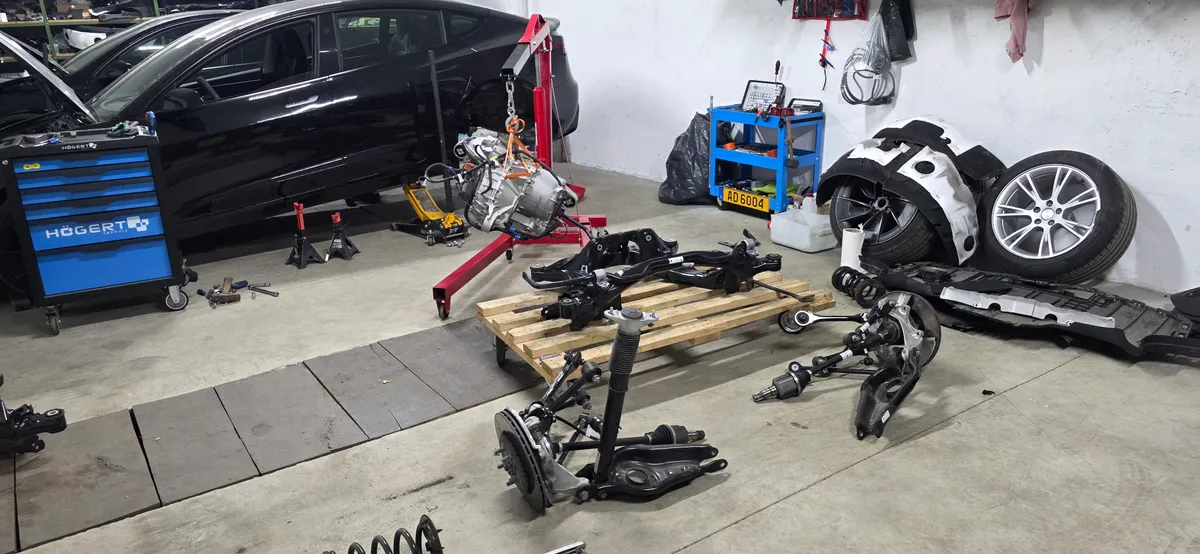
🛠️ Tools Needed for This Repair
These are the tools I personally use and recommend. Using quality tools makes the job easier and safer.
-
iFixit Pro Tech Toolkit View on iFixit
-
Floor Jack (3-Ton)
-
Jack Stands (Set of 4)
-
Torque Wrench
-
OBD2 Scanner for Tesla
We earn commissions from qualifying purchases through our affiliate partners. This helps support the site at no extra cost to you.