Tesla Phantom Braking: 5 Proven Fixes (2026)

🛠️ Tools for this job:
Microfiber Glass Cleaning Cloths
Camera Lens Cleaner
Dash Cam (to document incidents)
+5 more tools ↓

You're cruising on Autopilot, nothing ahead, and the car slams the brakes. That's phantom braking — and while Tesla's FSD v13 has improved it dramatically, it still happens in 2026. Here's what triggers it, how each Tesla model is affected differently, and the settings that actually reduce incidents by up to 80%.

Quick fixes that work:
  1. Clean all cameras — especially windshield and B-pillar
  2. Recalibrate cameras — Controls > Service > Camera Calibration > Clear
  3. Increase follow distance — higher number = gentler braking
  4. Update software — FSD v13 significantly reduces phantom braking
  5. Report it — say "Bug report, phantom braking" after each incident

What Is Phantom Braking?

Phantom braking is when your Tesla suddenly slows down or brakes hard without any visible reason. This typically happens when:

  • Using Autopilot or Full Self-Driving (FSD)
  • Traffic-Aware Cruise Control is active
  • Driving on highways, especially under overpasses
  • Approaching shadows or changes in road surface
Safety Note: While phantom braking is annoying and potentially dangerous, it's a result of the car being cautious. Always keep your hands on the wheel and be ready to take over when using any driver assistance features.

Why Does It Happen?

Technical Causes

Camera-Based Vision: Tesla removed radar from newer vehicles (2021+), relying solely on cameras. While cameras are improving with every software update, they can misinterpret:

  • Shadows from overpasses
  • Road surface changes (asphalt to concrete transitions)
  • Signs and billboards
  • Sun glare at low angles
  • Lane markings and road paint

Neural Network Interpretation: The car's neural network sometimes sees patterns that don't exist or misidentifies objects:

  • A shadow interpreted as an obstacle
  • A sign read as something in the road
  • Bridge joints seen as stopped vehicles
  • Metallic guardrails reflecting sunlight

Previous Incidents: Tesla's fleet learning means the car sometimes "remembers" phantom obstacles from other vehicles' experiences at specific locations. This is being phased out with the end-to-end neural network approach in FSD v13.

Common Triggers

Trigger Why It Happens
Overpasses Shadow interpreted as obstacle
Bridges Expansion joints look like objects
Road signs Reflections or proximity confusion
Trucks in adjacent lanes Interpreted as entering your lane
Road surface changes Color/texture change detected
Sunset/sunrise Low sun angle confuses cameras
Rain/snow Visibility issues
Highway guardrails Metal reflections misread as vehicles
Construction zones Unusual markings and barriers

Model-Specific Phantom Braking Notes

Not all Teslas experience phantom braking equally. Here's what to know about your specific model:

Model 3 Highland / Refreshed (2024–2026)

The refreshed Model 3 uses Tesla's latest camera hardware with higher resolution sensors. Owners report fewer phantom braking events compared to pre-refresh models, but the new camera placement (integrated into the bumper) can pick up more road-surface reflections in rain. Key fix: Keep the front bumper camera lenses clean — road spray builds up faster than the windshield cameras.

Model Y Juniper (2025–2026)

The Juniper refresh includes updated cameras and a new computing platform. Early owners have reported generally better Autopilot behavior, but some have noticed phantom braking near highway sound barriers — a new trigger pattern Tesla is still learning. If you own a Juniper and experience suspension rattles combined with phantom braking, address both separately — they're unrelated issues.

Model S/X (2021+ Refresh)

These models had radar removed later than Model 3/Y, and some 2021 units shipped with radar still installed. If your Model S/X still has radar (check Controls > Software > Additional Vehicle Information), phantom braking patterns will differ — radar-equipped vehicles tend to phantom brake more at overpasses but less in low-light conditions.

Pre-2021 Models (Radar Equipped)

Older Teslas with radar experience a different type of phantom braking caused by radar interference from overpasses, guardrails, and large metal structures. The fixes below still apply, but you may also benefit from checking if your radar sensor (behind the front bumper) is blocked by dirt, ice, or damage.

Fixes and Workarounds

Fix 1: Keep Cameras Clean

Dirty cameras are a major cause of phantom braking:

  1. Clean windshield regularly — Inside and out
  2. Clean camera housings — Pillar cameras, B-pillar cameras
  3. Check for water spots — Can cause distortion
  4. Replace worn wipers — Streaks affect camera visibility and directly contribute to phantom braking

Camera locations to clean:

  • Front cameras (behind windshield at top)
  • B-pillar cameras (both sides)
  • Fender cameras (both sides)
  • Rear camera
  • Front bumper cameras (Model 3 Highland, Model Y Juniper)
Pro Tip: Use a camera lens cleaner and microfiber cloth. Avoid household glass cleaners which can leave residue that creates halos in sunlight — exactly the conditions that trigger phantom braking.

Fix 2: Recalibrate Cameras

Sometimes cameras need recalibration:

  1. Go to Controls > Service > Camera Calibration
  2. Select Clear Calibration
  3. Drive on well-marked roads for 20-100 miles
  4. The car will recalibrate automatically (see our camera calibration guide for the full procedure)

When to recalibrate:

  • After windshield replacement
  • If you notice increased phantom braking
  • After any front-end body work
  • Periodically (every 6-12 months)
  • After a major software update

Fix 3: Adjust Autopilot Settings

Changing settings can reduce phantom braking severity:

Following Distance:

  • Increase following distance (1-7 setting)
  • Higher number = more space = gentler braking
  • Setting 5-7 significantly reduces harsh phantom brake events

Speed Offset:

  • Using "Speed Limit" mode vs. "Current Speed" mode
  • Some users report fewer issues at lower speed offsets
  • Try setting speed limit offset to +5 mph instead of +10-15 mph

Disable Traffic Light/Sign Control:

  • FSD users can try toggling this off temporarily
  • Reduces complexity of what system is analyzing

Fix 4: Software Updates

Tesla continuously improves Autopilot/FSD:

  1. Keep your software up to date
  2. Check for pending updates: Controls > Software
  3. Enable Advanced updates for latest improvements
  4. Note which software versions improve phantom braking

Fix 5: Report Issues to Tesla

Tesla uses fleet data to improve:

  1. Use voice command: "Bug report, phantom braking"
  2. This flags the location for Tesla to analyze
  3. Over time, known problem spots get addressed
  4. The more reports, the faster fixes come

2026 Software Improvements: FSD v13 and End-to-End Neural Network

Tesla's approach to phantom braking changed fundamentally with the end-to-end neural network architecture introduced in late 2024 and refined throughout 2025-2026.

What Changed

Old approach (pre-end-to-end): Separate modules handled perception (seeing objects), planning (deciding what to do), and control (steering/braking). Phantom braking often happened because the perception module incorrectly flagged an object, and the planning module treated it as a hard obstacle requiring emergency braking.

New approach (FSD v13): A single neural network processes raw camera data and outputs driving commands directly. This means the system can weigh context — it "understands" that a shadow under an overpass isn't a wall, because it's seen millions of overpass shadows before.

Real-World Results

Owners on FSD v13 report:

  • 50-80% fewer phantom braking events on highways
  • Smoother deceleration when events do occur (less hard-braking, more gradual slowdown)
  • Overpass phantom braking nearly eliminated — this was the #1 complaint for years
  • Better night driving — the neural network handles darkness more consistently

Who Benefits Most

  • FSD subscribers get the end-to-end improvements first
  • Standard Autopilot / Enhanced Autopilot users receive trickle-down improvements but on a delayed timeline
  • Older hardware (HW3) benefits less than HW4 vehicles due to processing limitations
Check your hardware: Go to Controls > Software > Additional Vehicle Information. HW4 vehicles (most 2024+ builds) get the best phantom braking improvements from FSD v13.

Driving Strategies to Minimize Impact

Anticipate Problem Areas

Learn where phantom braking typically occurs:

  • Under overpasses
  • Near large road signs
  • Where shadows cross the road
  • At bridge expansion joints
  • Near construction zones

When approaching these areas:

  • Hover foot over accelerator
  • Be ready to override
  • Consider disengaging Autopilot temporarily

Use Autopilot Wisely

Best conditions for Autopilot:

  • Clear weather
  • Well-marked highways
  • Moderate traffic
  • Clean cameras

Consider manual driving when:

  • Low sun angle (sunset/sunrise)
  • Heavy rain or snow
  • Construction zones
  • Unfamiliar roads with poor markings

Night Driving

Phantom braking can actually be less common at night because:

  • No shadows
  • Headlights illuminate objects clearly
  • Less visual clutter

However, wet roads at night can cause issues from headlight reflections off the road surface.

When Phantom Braking Is Dangerous

Take extra precautions when:

  1. Vehicles following closely — Risk of rear-end collision
  2. High-speed highways — Sudden braking is more dangerous
  3. Trucks behind you — Longer stopping distances needed
  4. Wet or icy roads — Braking can cause loss of control
Important: If a car is tailgating you while on Autopilot, consider turning it off. A phantom brake event with someone close behind is genuinely dangerous. Multiple rear-end collisions have been attributed to phantom braking situations.

Filing an NHTSA Complaint

If phantom braking creates a dangerous situation — near-collision, actual crash, injury — you should file a complaint with NHTSA (National Highway Traffic Safety Administration):

  1. Go to nhtsa.gov/report
  2. Select "Safety Issues with Vehicles or Equipment"
  3. Enter your Tesla's VIN, year, and model
  4. Describe the incident — include date, location, speed, conditions, and whether Autopilot/FSD was active
  5. Submit — NHTSA uses aggregate complaints to open investigations

Why it matters: Over 750 phantom braking complaints have been filed with NHTSA as of 2026. These complaints directly contributed to NHTSA's investigation into Tesla's Autopilot system and put pressure on Tesla to prioritize software fixes. Your complaint adds to the safety record.

EU residents: Report to your national vehicle safety authority. In Germany, that's the KBA (Kraftfahrt-Bundesamt). In the UK, it's DVSA.

Documenting Incidents

If you experience frequent phantom braking:

  1. Install a dash cam — Documents what the cameras saw vs. what was actually there
  2. Note the location — GPS coordinates if possible
  3. Note conditions — Weather, lighting, time of day
  4. Screenshot software version — Helps track improvements
  5. Check Sentry Mode footage — Can sometimes capture the event from additional angles

This documentation is useful for:

  • Tesla service appointments
  • NHTSA complaints if severe
  • Insurance claims if involved in a collision
  • Tracking your own problem spot patterns

Tesla's Improvements Over Time

Tesla has made significant progress:

Radar Era (Pre-2021):

  • Radar sometimes conflicted with camera data
  • Overpasses caused radar reflections
  • More false positives from radar interference

Vision Only (2021-2023):

  • More consistent but initially more phantom braking
  • Relied on modular perception → planning → control pipeline
  • Gradual improvement through fleet learning

End-to-End Neural Network (2024-2026):

  • FSD v12 introduced the end-to-end approach
  • FSD v13 refined it with smoother control outputs
  • Overpass phantom braking largely solved
  • Remaining issues: low sun angle, unusual road geometry, construction zones

Cost

This guide focuses on free fixes. However:

Solution Cost
Camera cleaning ~€10 / $10 (supplies)
Camera recalibration Free (built-in)
Software updates Free
Dash cam setup €50-200 / $50-200
Windshield sunshade (reduces sun glare triggers) €20-40 / $20-40
Professional calibration (if needed) €100-200 / $100-200

What Tesla Owners Say Works Best

From community experience across forums, Reddit, and owner groups:

  1. Keep cameras spotless — Single biggest factor
  2. Update software immediately — Each version typically improves
  3. Increase follow distance — More reaction time for smoother braking
  4. Learn your problem spots — Anticipate and prepare
  5. Report every incident — Helps Tesla improve faster
  6. Consider FSD subscription — Access to the latest neural network improvements first

Phantom braking is frustrating, but it's improving faster now than at any point in Tesla's history. The end-to-end neural network was the breakthrough — it's just not perfect yet. The best approach is a combination of keeping cameras clean, staying updated, and being prepared to take over. Remember: Autopilot is driver assistance, not autonomous driving.

Related Guides

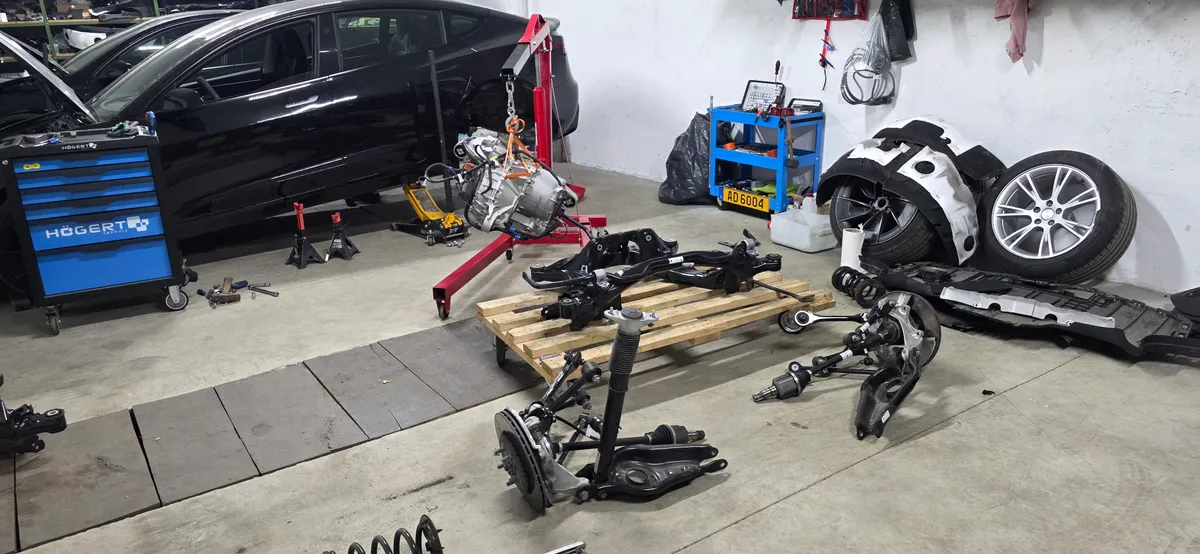
Tesla repair workshop

About the Author

Written by an independent, self-taught Tesla mechanic working on Teslas since 2018. I run my own shop and work on Teslas every day. These guides are based on real repair experience — not theory.

More about this site →

🛠️ Tools Needed for This Repair

These are the tools I personally use and recommend. Using quality tools makes the job easier and safer.

We earn commissions from qualifying purchases through our affiliate partners. This helps support the site at no extra cost to you.

Found This Guide Helpful?

Get more Tesla repair tips and new guides delivered to your inbox.

More Repair Guides

Tesla Frunk Won't Open? Emergency Release Guide

Tesla frunk stuck closed? Learn emergency release methods and DIY fixes. Covers latch issues, 12V battery problems, and manual override.

Tesla Suspension Noise: Diagnose & Fix at Home

Tesla suspension making noise? Diagnose clunks, squeaks, and rattles yourself. Covers common causes and DIY fixes before service visits.

Tesla Charge Port Stuck? 6 Ways to Release It (2026)

Tesla charge port won't release the cable? 6 proven methods to unlock a stuck charge port, including manual release, latch replacement, and cold weather fixes for all Tesla models.