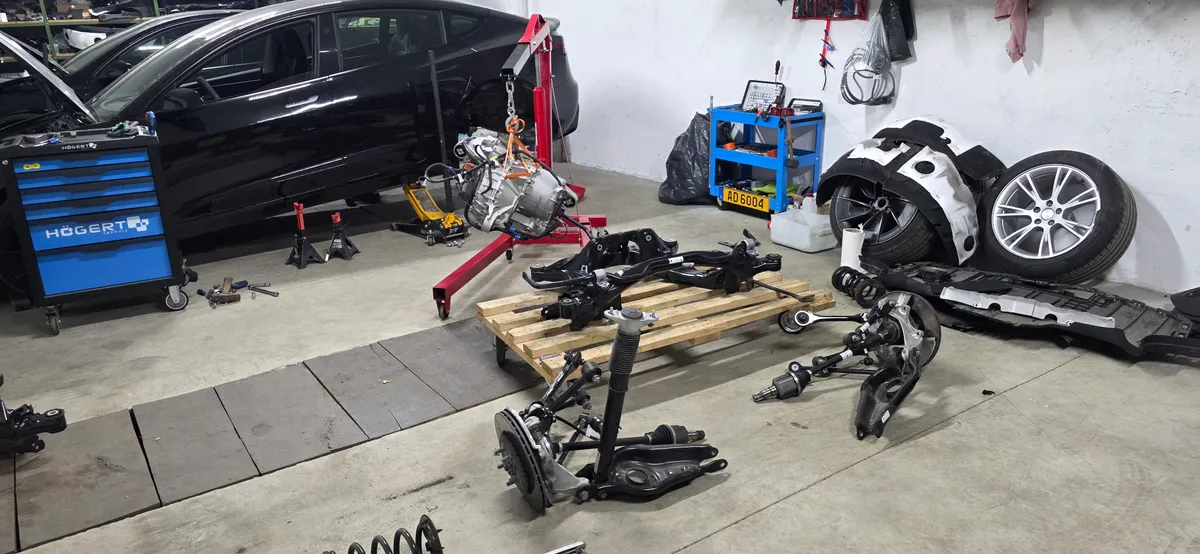
Tesla Creaking and Rattling: Find the Source Safely
Some links are affiliate links. As an Amazon Associate I earn from qualifying purchases. Check vehicle compatibility before buying. How recommendations work.
A Tesla creak or rattle is a symptom, not a parts diagnosis. First separate a loose object or cabin contact from a noise linked to steering, braking, wheel movement or the underside of the car. A sound heard near the dashboard can travel through the body; its apparent location does not prove a trim clip is responsible.
This guide provides parked checks and a way to assess a workshop's findings. It does not require removing trim, lifting the vehicle or buying a rattle kit. The official examples were checked on October 5, 2026; select the matching model and generation before applying any service procedure.
When to Stop Driving
A light trim rattle with otherwise normal operation is different from a noise accompanied by loss of control or visible damage. Stop safely and arrange recovery if a new knock or scrape comes with:
- Suddenly loose, binding or unpredictable steering, or a wheel visibly out of position.
- Reduced braking, a soft or sinking brake pedal, or suspected brake-fluid leakage.
- A part dragging on the road, tire contact with damaged bodywork, or severe vibration after an impact.
Follow any vehicle alert that instructs you to stop. Do not take a test drive to reproduce these symptoms. If an airbag warning stays on, Tesla's Model 3 manual says not to drive until the system has been inspected. Tesla airbag warning guidance.
Match the Noise to Its Trigger
Use what you have already noticed during ordinary use. There is no need to drive over extra bumps, make abrupt steering inputs or hold a phone while driving to collect evidence.
| When it happens | Useful distinction | Next step |
|---|---|---|
| Rattle from a storage area over rough surfaces | Loose belongings can contact the compartment; hidden trim remains another possibility | Empty accessible storage and check normally operated lids while parked |
| Buzz with music playing | Audio can excite an object, trim or speaker mounting | Compare audio paused versus playing at moderate volume while parked |
| Creak when steering or crossing bumps | Steering and suspension movement may be involved; sound alone cannot identify a joint | Request inspection if repeated, new or worsening |
| Click or clunk as braking or direction changes | Brake hardware, driveline load changes and other movement need distinguishing | Note the exact trigger; do not assume a loose caliper or failed bearing |
| Noise changes with cabin fan setting while stationary | Climate operation is associated with the sound | Compare fan settings; request HVAC diagnosis if abnormal or persistent |
| Scrape or flap from below, especially after an impact or repair | A shield, liner or other component may be contacting something | External visual check only; workshop inspection before assuming it is cosmetic |
| Creak near roof, windshield or hatch | The perceived location may involve trim, glass, seals or body movement | Have the contact point verified before adding lubricant or adjusting anything |
A change during a comparison narrows the investigation. It does not, by itself, confirm which part needs replacing.
Safe Checks With the Car Parked
Park on a level surface, select Park and keep clear of moving seats, doors and windows. Change one thing at a time so the result remains useful.
- Remove loose belongings. Empty cupholders, door pockets and accessible console or luggage compartments. Remove a loose charging cable or accessory that is contacting a hard surface. Do not pull wiring or reach into seat mechanisms.
- Check normal closures. Close storage lids using their normal controls. Check that luggage is secured and a loose seatbelt buckle is not resting against trim; leave the belt and its anchorage unmodified.
- Compare the audio. Pause playback, then try the same passage at a moderate volume. A buzz that follows the audio is a useful clue, not proof that the speaker itself is defective.
- Compare cabin airflow. Use the normal climate controls to vary fan speed briefly. Restore the required comfort and demisting settings afterwards. A sound can persist because other thermal-management equipment is operating.
- Look for visible damage from outside. Without reaching beneath the car, check for a hanging panel or obvious tire contact. Do not crawl underneath or pull a shield to see whether it stops rattling.
If these checks do not identify an accessible loose object, leave the panels installed. Pressing, wedging or padding an unknown panel can conceal the symptom without resolving its cause.
A-Pillar and Dashboard Rattles: Do Not Pry First
A rattle near the windshield is not enough evidence to order a clip. The 2024+ Model 3 upper A-pillar trim procedure includes a tether, and the 2025+ Model Y procedure notes that tether versions vary. These are not interchangeable instructions for pulling every Tesla's trim down from the top. Tesla Model 3 upper A-pillar procedure, Tesla Model Y upper A-pillar procedure.
Leave A-pillar, headliner, airbag-cover and seatbelt-area dismantling to someone following the exact procedure. Do not pack foam behind these panels or attach material where it could interfere with restraint deployment. Tesla warns against placing objects near airbag covers and the side headliner area. Tesla airbag precautions.
For a trim repair, ask the workshop to identify the actual contact, damaged attachment or incorrect assembly, then verify the result under the original conditions. A model-name-only clip listing or a promise of a permanent felt-tape fix is insufficient.
Steering, Suspension and Wheel-Area Noises
A steering creak does not establish an upper-control-arm fault, and a wheel-area clunk does not identify a bearing. Inspection needs to locate abnormal movement, contact or damage in the relevant components.
Tesla's chassis inspection bulletin considers tire pressures, ball joints, bushings, suspension links and subframes. Its applicability is VIN-specific; it is not a declaration that every noisy Tesla has the same defect. This supports checking the system rather than selecting a component from sound alone. Tesla chassis inspection bulletin SB-25-31-004 R2.
Ask for the side and component identified, what movement or damage was observed, and the specification used to assess it. “There is play at the wheel” is incomplete unless the technician identifies which parts move relative to each other.
Do not spray a ball-joint boot as a repair or tighten suspension and seat fasteners speculatively. Tightening methods, replacement hardware and inspection requirements depend on the connection and vehicle. Noise reduction after spraying is not evidence that a joint is serviceable.
If a workshop identifies an outer steering joint, our tie rod diagnosis and alignment guide explains what evidence and completion checks to request. If the concern is brake rubbing, wear or pulsation, use the brake rotor inspection guide to understand the measurements. Neither link diagnoses this noise remotely.
Climate and Normal Operating Sounds
Tesla documents sounds associated with parking-brake operation, battery contactors, thermal management and charging. Its Model 3 examples include a front-area hum or slight tick during climate demand and battery-related expansion sounds while Supercharging. Compare the operating conditions as well as the sound. Tesla normal operating sounds.
That guide explicitly is not a diagnosis or an exhaustive list. It does not justify calling every winter dashboard click a heat-pump valve, every steering creak normal tire noise, or every underfloor knock harmless. A new persistent sound, reduced heating/cooling, an alert or changed steering/braking needs its own assessment.
For an HVAC complaint, the useful distinction is whether the sound follows cabin fan speed, temperature demand, charging or vehicle movement. Avoid replacing a cabin filter or blower solely because a buzz seems to come from the passenger footwell.
What a Useful Workshop Diagnosis Should Show
A short description is enough to start; a new video or owner-performed repair is not required. Provide conditions you already know and ask the repairer to complete the missing evidence.
| Record | Useful detail |
|---|---|
| Vehicle | Model, production date, relevant modifications and recent repair or impact |
| Trigger | Stationary or moving; steering, braking, bumps, audio, climate or charging |
| Pattern | Single click, repeated rattle or sustained buzz; new, intermittent or worsening |
| Other symptoms | Handling change, warning message, water ingress or reduced climate performance |
| Confirmed source | Exact side/component and how the noise was isolated |
| Repair basis | Damaged attachment, measured play, interference or another demonstrated fault |
| Proposed work | Correct procedure, parts/consumables and any required alignment or functional check |
| Verification | Same-condition comparison after repair; any remaining noise documented separately |
Ask for an itemized estimate after the source is established. Warranty coverage and the charge for diagnosis depend on the vehicle's terms and the actual finding; a rattle is not an automatic free repair.
Frequently Asked Questions
Can felt tape fix a Tesla rattle?
It may be part of a properly identified trim-contact repair, but it is not a general treatment for an unidentified sound. Keep padding away from restraint components, latches, moving parts and electrical connections. Confirm the cause and applicable repair method first.
Is a creak when turning always a control arm?
No. The trigger directs attention toward movement associated with steering, but does not identify the component. Repeated or worsening creaks need inspection; steering looseness, binding or instability changes the urgency.
Should I lubricate the roof seal or tighten the seat bolts?
Not as a diagnostic shortcut. Verify the source and the applicable material or fastener procedure. A glass, seal, seat-mount or restraint-related concern deserves a specific assessment rather than an all-model spray or tightening instruction.
Can a recording prove the car is safe to drive?
No. Audio can help describe a symptom but cannot establish joint play, fastener security, brake condition or structural damage. The stopping criteria and physical inspection take priority over a sound comparison.