Tesla Power Steering Issues: EPS Fix Guide
Tesla vehicles use an Electric Power Steering (EPS) system — there's no hydraulic fluid, belt, or pump. The steering feel is generated entirely by an electric motor on the steering rack. While this system is generally reliable, failures do occur, and they can make the car difficult or dangerous to drive.
Symptoms of Power Steering Problems
- Heavy or stiff steering — feels like the power assist has disappeared
- "Power steering assist reduced" warning on the touchscreen
- Steering wheel off-center after a suspension repair or alignment
- Clunking or grinding when turning the wheel
- Inconsistent steering feel — alternating between light and heavy
- Steering wheel vibration at certain speeds
Diagnosis: What's Actually Wrong?
Quick Checks (DIY-Friendly)
1. Reboot the car first Many EPS warnings are software glitches. Try:
- Scroll wheel reboot: Hold both steering wheel scroll wheels for 10 seconds
- If that doesn't work: Power off via Controls > Safety > Power Off, wait 3 minutes, press the brake
2. Check for recent suspension work If you recently had an alignment, tie rod replacement, or control arm work, the steering may need recalibration.
3. Check for error codes Use the touchscreen: Service Mode > Chassis > Steering to view any active diagnostic trouble codes.
Common Causes
| Symptom | Likely Cause | DIY Fix? |
|---|---|---|
| Heavy steering + warning | EPS motor/ECU failure | ❌ Rack replacement |
| Off-center steering wheel | Needs recalibration | ✅ Software |
| Clunking when turning | Worn tie rod ends | ✅ Replacement |
| Vibration at speed | Wheel balance or alignment | ✅ / Shop |
| Intermittent heavy steering | Loose connector or software | ✅ Check connections |
What You Can Fix Yourself
Steering Wheel Recalibration
After any suspension work, the steering angle sensor may need recalibration:
- Go to Controls > Service > Steering Calibration (if available in your software version)
- Alternatively, use Service Mode > Chassis > Steering > Steering Angle Calibration
- Follow the on-screen prompts — typically involves turning the wheel lock-to-lock
- Drive in a straight line for 1–2 km to complete calibration
Checking Steering Rack Connections
- Lift the front of the vehicle on jack stands
- Inspect the electrical connector on the EPS rack (located on the steering rack, driver's side)
- Check for corrosion, loose pins, or water intrusion
- Disconnect and reconnect the connector firmly
- Inspect tie rod ends for play — grab each wheel at 3 and 9 o'clock and try to wiggle
Tie Rod End Replacement
Worn tie rod ends are a common cause of steering issues and are fully DIY-friendly. See our dedicated tie rod end replacement guide for the full procedure.
Key torque specs for steering components:
| Fastener | Torque |
|---|---|
| Steering rack outer bolts to subframe | 27 Nm (20 ft-lbs) |
| Steering rack inner bolts to subframe | 75 Nm (55 ft-lbs) |
| Steering rack to electric steering column | 18 Nm (13 ft-lbs) |
| Tie rod end to knuckle | 180 Nm (133 ft-lbs) |
| Outer tie rod end jam nut | 80 Nm (59 ft-lbs) |
Sources: Tesla Service Manual, tighttorque.com
When You Need a Steering Rack Replacement
If the EPS motor or ECU inside the rack has failed, the entire steering gear assembly must be replaced. Signs:
- Persistent "power steering reduced" warning after reboot
- Complete loss of power assist
- Grinding/whining from the steering column area
- Error codes pointing to EPS motor or torque sensor failure
Cost Comparison: Steering Rack Replacement
| Option | Parts | Labor | Total |
|---|---|---|---|
| Tesla Service Center | $1,500–2,500 | $500–800 | $2,000–3,300 |
| Independent Shop | $800–1,500 (used/reman) | $400–600 | $1,200–2,100 |
| DIY (Experienced Only) | $800–1,500 | Your time | $800–1,500 |
Preventing Power Steering Issues
- Avoid curbing — impacts can damage the rack or tie rods
- Fix suspension issues promptly — worn control arms and sway bar links put extra stress on steering
- Keep software updated — Tesla occasionally patches EPS calibration issues
- Don't hold the wheel at full lock for extended periods
Related Guides
- Tesla Tie Rod End Replacement — Common cause of steering issues
- Tesla Control Arm Replacement — Front suspension components
- Tesla Wheel Alignment DIY — After any steering work
- Tesla Sway Bar Link Replacement — Related suspension components
- Tesla Jack Points & Lifting Guide — Safe lifting for undercar work
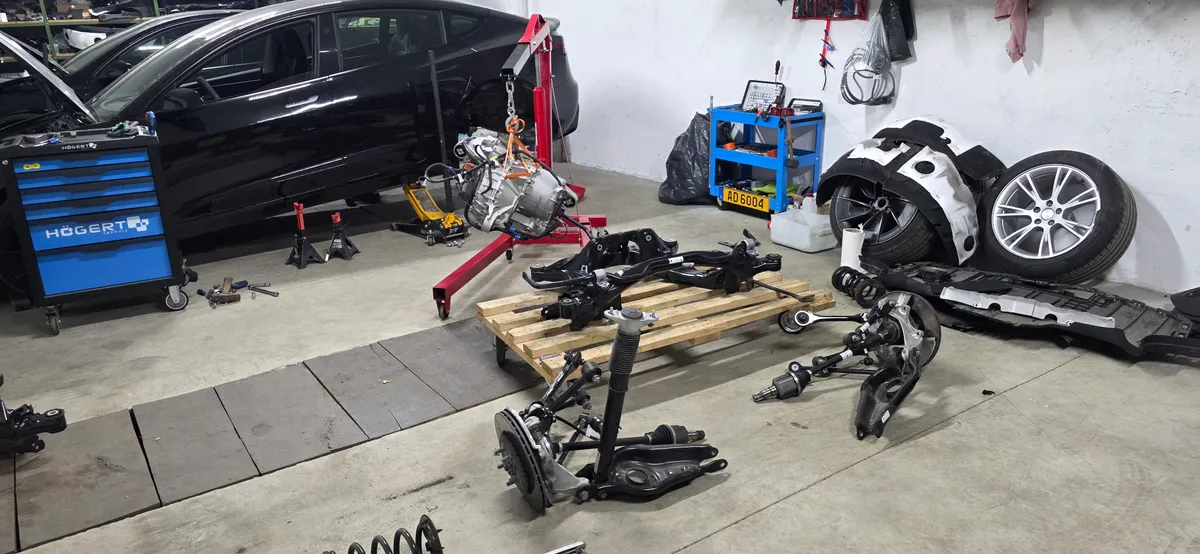
🛠️ Tools Needed for This Repair
These are the tools I personally use and recommend. Using quality tools makes the job easier and safer.
-
Floor Jack (3-Ton)
-
Jack Stands (Set of 4)
-
Torque Wrench (3/8 and 1/2 inch)
-
Socket Set (Metric)
-
Trim Removal Tools
-
iFixit Pro Tech Toolkit View on iFixit
We earn commissions from qualifying purchases through our affiliate partners. This helps support the site at no extra cost to you.