Tesla Maintenance Schedule: What You Actually Need (2026)
Some links are affiliate links. As an Amazon Associate I earn from qualifying purchases. Check vehicle compatibility before buying. How recommendations work.
One of the biggest selling points of owning a Tesla is low maintenance. No oil changes, no spark plugs, no transmission fluid, no timing belts. But "low maintenance" doesn't mean "no maintenance" - and skipping what little there is can lead to expensive problems down the road.
Here's exactly what needs servicing, when, and how much you'll save doing it yourself.
Tesla's Official Maintenance Items
Tesla has simplified their maintenance recommendations over the years. Here's the current official schedule:
Every 2 Years (or 40,000 km)
| Service Item | Applies To | DIY Difficulty | DIY Cost | Service Center Cost |
|---|---|---|---|---|
| Cabin air filter replacement | All models | Easy | €15-30 | €75-150 |
| Brake fluid testing | All models | Medium | €10-30 | €100-200 |
| A/C desiccant bag replacement | All models | Hard (requires refrigerant evacuation) | Not recommended DIY | €150-300 |
Every 4 Years (or 80,000 km)
| Service Item | Applies To | DIY Difficulty | DIY Cost | Service Center Cost |
|---|---|---|---|---|
| Coolant flush and replacement | All models | Medium | €80-150 | €300-600 |
| Brake fluid replacement | All models | Medium | €20-50 | €100-200 |
| Brake caliper cleaning and lubrication | All models | Medium | €10-20 | €150-250 |
Every Year
| Service Item | Applies To | DIY Difficulty | DIY Cost | Service Center Cost |
|---|---|---|---|---|
| Tire rotation | All models | Easy | Free (if you have a jack) | €50-100 |
| Brake pad inspection | All models | Easy (visual) | Free | Included in service |
| Windshield wiper blade replacement | As needed | Easy | €15-40 | €40-80 |
Model-Specific
| Service Item | Applies To | Interval | DIY? |
|---|---|---|---|
| Air suspension check | Model S/X with air suspension | Every 2 years | Visual only |
| Gear oil change | All models (front/rear drive units) | Every 200,000 km (or as needed) | Advanced |
| 12V battery replacement | All models | Every 3-5 years | Easy |
Which Brake Fluid to Buy for Your Tesla
Tesla specifies DOT 3/DOT 4 compatible fluid across all models. The critical compatibility rules:
- ✅ DOT 3, DOT 4, DOT 4 LV (Low Viscosity) — all compatible
- ✅ DOT 5.1 (water-based) — compatible on most models
- ❌ DOT 5 (silicone-based) — never use, not compatible with Tesla's rubber seals
Recommended Brands
| Brand | Grade | Dry Boiling Point | Best For |
|---|---|---|---|
| Castrol React DOT 4 | DOT 4 | 260°C | Best everyday pick, widely available |
| ATE SL DOT 4 | DOT 4 | 260°C | OEM-spec equivalent |
| Bosch ENV6 | DOT 4 LV | 265°C | Slightly better cold-temperature viscosity |
| Motul RBF 600 | DOT 4 Racing | 312°C | Track use or consistently hot climates |
For most owners, Castrol React DOT 4 or ATE SL is the right choice. Racing-grade fluid isn't needed for street use and costs significantly more.
How much to buy: Model 3/Y brake systems hold approximately 350–450 mL of fluid — a single 500 mL bottle covers a complete change with minimal waste. Model S/X systems hold slightly more; buy 1 liter to be safe.
Calendar replacement note: Even if your brake fluid test strips show acceptable moisture levels, replace fluid every 4 years on a calendar basis. Glycol-based fluid absorbs atmospheric moisture through the reservoir cap over time — a test strip only catches one degradation mode. For the complete fluid change procedure, see our Tesla Brake Fluid Change guide.
What Tesla Doesn't Tell You (But You Should Do Anyway)
The official schedule is conservative. Based on repair shop experience with hundreds of Teslas, here are the extras worth doing:
Every 6 Months
- Tire pressure check - the car monitors it, but manually verify with a gauge. TPMS sensors can drift.
- Wiper fluid top-up - especially before winter.
- Visual brake inspection - look through the wheel spokes. Teslas use regen braking heavily, so pads last 100,000+ km, but rotors can rust from disuse in humid climates.
Every Year
- Interior deep clean - Tesla's vegan leather needs conditioning to prevent cracking.
- Door seal inspection and lubrication - prevents wind noise and water leaks, especially in cold climates where rubber stiffens.
- Software update check - ensure you're on the latest version. Some owners unknowingly block updates.
Every 2 Years
- Wheel alignment - Teslas are heavy and eat tires unevenly without proper alignment. Especially after hitting potholes.
- 12V battery health check - the 12V battery powers all accessories and door mechanisms. A dead 12V means you can't even open the doors. Replace proactively at 3-4 years.
- Brake rotor inspection - light surface rust is normal, but deep pitting means replacement time.
Every 3-4 Years
- Battery health assessment - use an OBD2 scanner to check state of health (SoH), cell voltage delta, and charge cycles. Early detection of weak cells saves money.
Essential DIY Tesla Maintenance Tools
Having the right tools means each service takes 15–30 minutes instead of booking a service center appointment. Here's what covers 90% of Tesla maintenance:
The Basics (Start Here)
| Tool | What It's For | Cost | Buy |
|---|---|---|---|
| Low-profile floor jack (3T) | Tire rotation, suspension work | €80–150 | Amazon DE / US |
| Jack stands (set of 4) | Safe lifting support | €40–80 | Amazon DE / US |
| Tesla jack pad adapters (silicone) | Protect battery rails when jacking | €15–30 | Amazon DE / US |
| Torque wrench (20–110 Nm) | Wheel bolts, suspension fasteners | €40–80 | Amazon DE / US |
| Digital tire pressure gauge | Verify TPMS accuracy, seasonal top-ups | €8–15 | Amazon DE / US |
Intermediate (Handles More Jobs)
| Tool | What It's For | Cost | Buy |
|---|---|---|---|
| OBD2 Bluetooth scanner (OBDLink CX) | Battery state of health, fault codes | €60–120 | Amazon DE / US |
| Brake fluid moisture tester | Check DOT 4 water content in 15 sec | €8–15 | Amazon DE / US |
| Plastic trim pry tool set | Cabin air filter, door panel work | €8–15 | Amazon DE / US |
| Digital tread depth gauge | Know exactly when tires need replacing | €5–10 | Amazon DE / US |
| Digital multimeter | 12V battery voltage, electrical checks | €20–40 | Amazon DE / US |
Jack pad critical note: Always use Tesla-specific silicone puck adapters when lifting at the rocker panel lift points. Without them, the plastic sill trim will crack — a €300+ mistake. The correct lift positions differ between Model 3, Y, S, and X. See our Tesla Jack Points & Lifting Guide for exact placement on each model.
The OBD2 scanner is the most underrated tool on this list. With the Scan My Tesla app, you can see actual battery state of health (%), individual cell voltages, and cooling system temperatures — information the Tesla app doesn't expose. Catching a cell imbalance early means a software fix rather than a pack replacement. Full guide: Tesla OBD2 Scanner & Diagnostics.
Model 3/Y Maintenance Schedule at a Glance
The Model 3 and Y are the simplest Teslas to maintain. Here's your at-a-glance schedule:
| When | What | Estimated DIY Time |
|---|---|---|
| Every 6 months | Tire pressure check, wiper fluid, visual inspection | 15 min |
| Every year | Tire rotation, wiper blades (if worn) | 30-60 min |
| Every 2 years | Cabin air filter, brake fluid test, alignment | 1-2 hours |
| Every 3-4 years | 12V battery replacement | 15 min |
| Every 4 years | Coolant flush, brake fluid change, caliper service | 3-4 hours |
| As needed | Brake pads (100k+ km), shock absorbers (80-120k km), wheel bearings (80-150k km), control arm bushings (100k+ km), tie rod ends (80-120k km), sway bar links (60-100k km) | Varies |
Model S/X Additional Maintenance
Older Model S and X vehicles (especially pre-2021 refresh) have more to worry about:
Air Suspension (Model S/X with Air Ride)
The air suspension system adds maintenance complexity:
- Air springs - lifespan of 80,000-150,000 km. Listen for compressor running constantly (indicates a leak). See our air suspension troubleshooting guide.
- Compressor - usually fails from overwork (compensating for leaky springs). Replace springs first.
- Ride height sensors - can corrode in winter salt. Clean annually.
MCU1 Vehicles (2012-2018 Model S, 2015-2018 Model X)
- eMMC chip - the original 8GB eMMC storage wears out from constant logging. If your touchscreen is getting slow, freezing, or failing to boot, the eMMC needs replacement. See our MCU upgrade guide.
- Touchscreen - yellow border around the edge indicates adhesive failure. Tesla covered this under warranty for affected models.
Drive Unit (Early Model S)
Early Model S vehicles (2012-2016) had known drive unit issues:
- Milling noise at low speeds
- Clunking during transitions between drive and regen
- These were covered under the 8-year drivetrain warranty and most have been replaced by now
Model 3 Highland & Model Y Juniper (2024+): What Changed
The 2024 refresh models introduced a few maintenance differences worth knowing:
16V Auxiliary Battery
Both the Highland and Juniper replaced the old 12V lead-acid auxiliary battery with a 16V lithium-ion system. The upside: it's far more reliable, with an expected lifespan of 10+ years vs. 3-5 years for the old lead-acid units. The downside: there's no published DIY replacement procedure as of 2026. If you get a "12V battery" alert on a 2024+ vehicle, take it to Tesla service. Do not substitute a standard 12V battery — the charging system is calibrated for 16V and will damage electronics.
Rear-Wheel Steering (Model Y Juniper)
The Juniper added 4-wheel active steering (4WAS), where rear wheels steer slightly at low speeds for improved maneuverability. This changes tire wear dynamics: the rear tires experience more lateral scrub during low-speed turns and parking. Check rear tire wear every 6 months instead of yearly. When getting an alignment, confirm your shop has 4WAS calibration capability — not all alignment shops have updated their equipment yet.
Cabin Air Filter: Same Interval, New Location
The Highland moved the cabin air filter access point compared to older Model 3s. The replacement interval is unchanged (every 2 years), but the procedure differs. Check for model-year-specific instructions before starting — search "Model 3 Highland cabin air filter replacement" for the correct approach. The OEM-compatible filter is the same specification and costs €15-30 on Amazon DE or Amazon US.
Everything Else: Same Schedule
Brake fluid intervals, coolant schedule, tire rotation cadence, and wiper blade replacement are unchanged from previous generations. The full maintenance tables above apply to 2024+ models as well.
What You Don't Need to Maintain
Just as important as knowing what to do is knowing what you can skip:
- No engine oil - electric motors don't use oil (the gear oil in the drive unit is a sealed system, checked only at very high mileage)
- No transmission service - single-speed reduction gear, sealed unit
- No spark plugs - no combustion engine
- No timing belt/chain - doesn't exist
- No exhaust system - nothing to rust or replace
- No emission testing - EVs are exempt in most countries
- No alternator/starter motor - electric architecture eliminates these
Tire Health & Replacement: The Hidden Tesla Maintenance Cost
Tires deserve their own section because Teslas eat them faster than comparable ICE cars. The reason is weight: a Model Y weighs ~2,100 kg vs. ~1,600 kg for a comparable gas SUV. That extra 500 kg shows up directly on your tires — especially with an electric motor's instant torque delivery.
Typical Tire Lifespan by Model
| Model | Front Tires | Rear Tires | Notes |
|---|---|---|---|
| Model 3 LR / SR | 40,000–60,000 km | 35,000–55,000 km | RWD: rears wear faster |
| Model 3 Performance | 25,000–35,000 km | 20,000–30,000 km | Aggressive alignment, staggered fitment |
| Model Y LR / AWD | 35,000–50,000 km | 28,000–45,000 km | Heavy + AWD loads rears |
| Model Y Performance | 20,000–35,000 km | 15,000–28,000 km | Staggered — can't cross-rotate |
| Model S LR | 40,000–60,000 km | 35,000–55,000 km | Air suspension distributes load better |
Why rear tires wear faster on AWD models: The rear motor handles the majority of regenerative braking load. Combined with rear-biased torque distribution during acceleration, rear tires typically need replacing 10,000–20,000 km before fronts. Rotating every 10,000 km is the single best way to equalize this.
When to Replace
- EU legal minimum: 1.6mm tread depth across the central three-quarters of the tread
- Tesla recommendation: Replace at 3mm — significantly better wet grip and hydroplaning resistance
- Quick check: Insert a 1-euro coin into the tread groove. If you can see the gold outer rim, you're near the limit
A digital tread depth gauge (US) costs €5–10 and takes 30 seconds to use. Worth keeping in the frunk alongside your emergency kit.
Performance Models: Staggered Tires and What That Means
Model 3 Performance and Model Y Performance use different front and rear tire sizes (staggered fitment). These cannot be cross-rotated to the opposite axle — only front-left/front-right swaps are possible. The practical result: rear tires wear out before fronts, and you'll typically replace rear tires twice for every set of fronts. Factor this into your total cost of ownership.
For the complete rotation procedure for all models, see our Tesla Tire Rotation Guide.
Maintenance Cost Comparison: DIY vs. Service Center
Over 8 years and 160,000 km, here's what maintenance looks like:
Tesla Service Center
| Item | Occurrences | Cost Each | Total |
|---|---|---|---|
| Cabin air filter | 4 | €120 | €480 |
| Brake fluid test + change | 2 tests + 2 changes | €150 avg | €600 |
| Coolant flush | 2 | €450 | €900 |
| Tire rotation | 8 | €75 | €600 |
| A/C desiccant | 4 | €225 | €900 |
| Caliper service | 2 | €200 | €400 |
| 12V battery | 2 | €200 | €400 |
| Wiper blades | 4 | €60 | €240 |
| Total | €4,520 |
DIY
| Item | Occurrences | Cost Each | Total |
|---|---|---|---|
| Cabin air filter | 4 | €25 | €100 |
| Brake fluid | 2 tests + 2 changes | €30 avg | €120 |
| Coolant flush | 2 | €120 | €240 |
| Tire rotation | 8 | €0 | €0 |
| A/C desiccant | Skip or dealer | - | €450 (2x dealer) |
| Caliper service | 2 | €15 | €30 |
| 12V battery | 2 | €80 | €160 |
| Wiper blades | 4 | €25 | €100 |
| Total | €1,200 |
DIY savings over 8 years: ~€3,300
That's not counting the bigger jobs like brake pads (€200 DIY vs €600+ service center) or shock absorbers (€400 DIY vs €1,200+ service center) that may come up at higher mileage.
When to Use Tesla Service Center vs. DIY
DIY-friendly (save money):
- Cabin air filter - 10 minutes, very easy
- Wiper blades - 5 minutes
- Tire rotation - 30-60 minutes with a jack
- 12V battery - 15 minutes
- Brake pads - 1-2 hours per axle
- Interior cleaning - as thorough as you want
Best left to professionals:
- A/C desiccant bag - requires refrigerant evacuation/recharge
- Coolant flush - doable DIY but air bleeding takes patience
- Alignment - requires specialized equipment
- Anything high-voltage - leave orange cables alone unless trained
Must be Tesla Service Center:
- Warranty claims
- Recalls (most are OTA, some require physical service)
- Software-locked features
- Body repair (for insurance documentation)
Seasonal Maintenance Checklist
Tying maintenance to the seasons is more practical than tracking exact intervals. Here's what to check each quarter:
Spring (March–April)
- Tire pressure top-up — pressure drops ~0.1 bar for every 5°C drop in temperature. Winter kept them low; re-inflate to the door sticker spec now (typically 2.9 bar front, 2.9 bar rear for Model 3/Y)
- Underbody wash — road salt from winter accelerates corrosion on heat pump components, brake lines, and suspension fasteners
- Door seal inspection — winter cold dries and cracks rubber seals. Apply silicone rubber conditioner to prevent wind noise and water leaks
- Wiper blade check — winter destroys blade rubber. Any streaking or chattering means replacement time
- Brake rotor visual — light orange surface rust after winter is normal and will clear in a few stops. Deep pitting or severe corrosion means replacement
- Software update check — confirm you're on the latest version via Controls → Software before the summer driving season
Summer (June–August)
- Battery preconditioning review — verify preconditioning is scheduled before Supercharger sessions. Hot ambient temperatures can limit charge rates if the pack isn't pre-cooled
- Interior deep clean — UV and heat accelerate vegan leather degradation. Apply a leather conditioner in summer before cracking starts
- Tire tread depth measurement — measure all four corners with a gauge. If any corner is under 4mm, plan replacements before autumn rains
Autumn (September–October)
- Winter tire switch — below 7°C, summer tire rubber hardens and stopping distance increases significantly
- Brake fluid moisture test — a €10 test strip reveals if fluid needs changing. Do it in autumn while service centers are less busy
- Washer fluid switch — swap to -30°C winter fluid before the first frost. Standard fluid will freeze in the reservoir and crack the pump
- 12V battery voltage check — measure with a multimeter. Healthy: 12.6–13.2V at rest. Under 12.2V = weak, replace before winter. Cold weather kills weak 12V batteries and you won't be able to open the doors
Winter (December–February)
- Monthly tire pressure top-up — pressure drops every month as temperatures stay low. Check monthly, not just once
- Charge port door check — ice can form in the charge port latch. Keep the port door operation clean; apply silicone lubricant if it's sticking
- Phantom drain monitoring — battery drain is higher in winter. Disable Sentry Mode when parked in a safe location to preserve charge. Don't let the battery drop below 20% in extreme cold
Cybertruck Maintenance: What's Different
The Cybertruck (2024+) shares Tesla's low-maintenance EV architecture but has a few unique considerations:
48V Electrical Architecture
Unlike all other Teslas, the Cybertruck runs a 48V low-voltage system instead of 12V. This means:
- The auxiliary battery (a lithium cell) has an estimated 10+ year lifespan
- Do not attempt to jump-start the 48V system with a standard 12V battery pack — it will cause damage
- If you see a "48V system" alert, this requires Tesla service
Stainless Steel Body
The brushed stainless steel exterior requires zero corrosion protection — there's no paint to chip or rust through. Skip the PPF and undercoating products marketed for the body panels. The underbody is still conventional steel and benefits from an annual underbody wash to remove road salt.
Tire Maintenance: Critical
The Cybertruck rides on large 35-inch tires with a unique size (AT37 stock). Rotation is especially important given the truck's weight (>3,000 kg). Rotate every 8,000–10,000 km. Replacement tires are expensive (€400–600+ each) and have limited aftermarket options as of 2026 — budget for this.
Air Suspension (Standard)
All Cybertrucks include air suspension. Refer to the Model S/X air suspension notes above — the same maintenance logic applies. Inspect annually for compressor run time and listen for the system running more than 30 seconds when leveling.
Everything Else
Brake fluid, cabin air filter, coolant intervals are identical to Model Y. The same DIY guides on this site apply. Torque spec for lug bolts: 175 Nm (same as Model 3/Y).
Torque Specs Quick Reference
When doing DIY maintenance that involves removing and reinstalling fasteners, these are the specs you need:
| Component | Spec | Notes |
|---|---|---|
| Wheel lug bolts — Model 3/Y/Cybertruck | 175 Nm (129 ft-lbs) | Torque in a star pattern; re-torque after 50 km if wheels were removed |
| Wheel lug bolts — Model S/X | 165 Nm (122 ft-lbs) | Same star pattern procedure |
| Cabin air filter cover screws (Model S/X) | 2 Nm | Finger-tight + quarter turn; plastic threads strip easily |
| Brake caliper slide pin bolts (Model 3/Y) | 35 Nm | Clean threads before reinstalling; use fresh copper grease on pin |
| Brake caliper bracket bolts (Model 3/Y) | 88 Nm | Critical — these hold the caliper to the knuckle |
| Wheel speed sensor bolt | 10 Nm | Delicate — do not overtighten |
| Drive unit drain plug (gear oil) | 45–50 Nm | Torque to lower end of range on aluminum housings |
Pro tip: Always use a calibrated click-type torque wrench for wheel lug bolts. The factory spec is not a suggestion — under-torqued wheels can loosen at speed and overtorqued studs will crack. A quality torque wrench like this €40–80 model (US) pays for itself after your first tire rotation.
Gear Oil: The Forgotten Fluid
Tesla's drive units use a small amount of gear oil to lubricate the reduction gear and motor bearings. It's a sealed system — you won't find a dipstick, and Tesla doesn't list it in the official maintenance schedule. But it's not magic oil that lasts forever.
When to Check or Change
- Standard: 200,000 km for most models (Model 3/Y front and rear units)
- After any drive unit repair or water ingress event — contaminated gear oil accelerates bearing wear
- Pre-purchase inspection on high-mileage used Teslas (150,000+ km): check the oil color and level at the drain plug
What Oil to Use
| Model | Unit | Spec |
|---|---|---|
| Model 3/Y rear (large motor) | Dexron VI ATF or Castrol Axle EPX 75W | 0.45L capacity |
| Model 3/Y front (small motor) | Pentosin ATF 9 or equiv. | 0.5L capacity |
| Model S/X | NOCO Gear Oil or Tesla OEM spec | Varies by unit generation |
Use only the correct spec — mixing gear oil types or using engine oil will cause foaming and premature bearing failure. The procedure requires a lift and a fluid pump. Full details: Tesla Gear Oil Change Guide.
Cost: About €30–50 in fluids DIY. At a service center: €200–400. Not a frequent job, but worth doing on any Tesla approaching 200,000 km or exhibiting a faint whine from the drive unit.
Also check our Drive Unit Noise Fix guide if you suspect early-stage bearing wear — catching it before it reaches the gear oil isn't cheap, but it's significantly cheaper than a full drive unit replacement.
Tesla Coolant: G-48 and What to Buy
All Tesla models (except Cybertruck, which uses the same spec) use G-48 specification coolant — OAT chemistry, ethylene glycol-based, silicate-free. This is a standard automotive formulation, not a proprietary Tesla product. Multiple brands are compatible.
Compatible Coolant Brands
| Brand | Spec | Form |
|---|---|---|
| VW G 048 000 | OEM G-48 | Concentrate — dilute 1:1 with distilled water |
| BASF Glysantin G48 | OEM G-48 | Concentrate |
| Febi Bilstein G48 | G-48 compatible | Concentrate |
| Mannol Longterm AF12+ | G-48 compatible | Concentrate |
What to avoid: "Universal" coolants claiming compatibility with all vehicles. Some contain silicates or phosphates that form deposits in Tesla's aluminum coolant channels over time. Always verify the G-48 specification on the label before buying.
Mixing ratio: Tesla uses a 50/50 mix of concentrate to distilled water. Never use tap water — mineral content causes scale buildup in coolant passages. Pre-mixed 50/50 formulations also work (no measuring needed).
How much you need: The thermal management system on Model 3/Y holds approximately 6–7 liters total. For a complete flush, buy 3–4 liters of concentrate and have 4 liters of distilled water ready. Model S/X cooling systems are larger — buy 5 liters of concentrate.
Coolant disposal: Ethylene glycol is toxic to animals and must not go down drains or into general waste. Most auto parts stores (Halfords, ATU, Midas in EU; AutoZone and O'Reilly in US) accept used coolant for recycling at no charge. Store it in a sealed, labeled jug until disposal day.
Full procedure with photos: Tesla Coolant Flush & Change Guide.
Rust Prevention: One Step Many Owners Skip
Teslas don't rust in the traditional sense — the aluminum body panels, glass roof, and stainless steel fasteners don't corrode. But the steel subframe, brake lines, suspension arms, and heat pump plumbing under the car absolutely do, especially in northern Europe where road salt is used from October to April.
A single annual underbody wash (spring, after the last salt application) removes the majority of chloride deposits before they can pit the steel. Budget €15–20 at a high-pressure car wash with underbody flush capability.
For vehicles operating in heavy salt conditions or coastal environments, an application of a cavity wax or rubberized underbody coating every 2–3 years adds years to the underbody components. See our Tesla Rust Prevention & Undercoating Guide for product recommendations and application areas.
Key products:
- Dinitrol RC900 Cavity Wax (US) — for enclosed sections and subframe cavities
- Bilt Hamber Dynax S50 (US) — waxy film for exposed underbody panels
Setting Up Reminders
Don't rely on memory. Set up maintenance reminders:
- Tesla app - schedule service directly from the app when items are due
- Calendar reminders - set recurring annual/biennial reminders for each item
- Mileage-based - note your odometer reading and set the next service at the target km
- Service Mode - periodically check Service Alerts for any flagged issues
Keep a Maintenance Log — It's Worth Real Money
A simple maintenance record protects your warranty, increases resale value, and gives you a diagnostic baseline. It takes 90 seconds per service event.
What to Record
For each job, note:
- Date
- Odometer reading
- What was done (e.g., "cabin air filter replaced")
- Parts used (brand, part number if known, where purchased)
- Cost (parts only for DIY)
Where to Store It
Physical logbook: A service logbook in the glove box carries more weight at resale — buyers and dealers can inspect it in person. A generic car service logbook (US) from any stationery store or Amazon works. Cost: €5–10.
Digital backup: Photograph your receipts after each service and save them to a Google Drive folder named with your Tesla's VIN. This takes 15 seconds and ensures you can prove maintenance history even if the physical book is lost.
Tesla app: The app automatically logs Tesla service center visits. For DIY work, add a brief note in a recurring calendar reminder — that timestamp and mileage is enough to establish a record.
Why Records Matter for Warranty
Tesla's warranty doesn't require you to use their service centers (EU consumer law is clear on this). But if a failure is related to a maintenance item — for example, a coolant pump failure at 70,000 km where coolant was never changed — Tesla may ask for evidence of upkeep. A dated receipt for G-48 coolant and a log entry with mileage rebuts any maintenance-negligence argument.
Resale Value
A documented Tesla service history adds €500–1,500 to private sale value based on typical European used EV pricing. Buyers and dealers both check maintenance records before making offers — a clean log is a concrete differentiator against identical cars with no records.
Frequently Asked Questions
Does skipping maintenance void the Tesla warranty? Not automatically, but if a failure is caused by neglected maintenance (like coolant degradation causing a pump failure), Tesla can deny that specific warranty claim. Keep records of your DIY maintenance.
Is Tesla maintenance more expensive than regular cars? No - it's significantly cheaper. A comparable BMW or Mercedes costs €6,000-10,000 in maintenance over the same 8-year period. Tesla's lack of engine-related services saves thousands.
Can I take my Tesla to an independent shop? Yes. Tesla can't require you to use their service centers for warranty to remain valid (at least in the EU under consumer protection laws). Many independent EV shops offer Tesla service at lower prices.
What about the battery warranty? The high-voltage battery and drive unit are covered for 8 years / 160,000 km (Model 3/Y) or 8 years / 240,000 km (Model S/X), with a guarantee of 70% retention. This is separate from maintenance - it's a warranty on the component itself.
How do I know when brake pads need replacing? Tesla pads last much longer than ICE cars (100,000-200,000 km) due to regenerative braking. When they're getting low, you'll hear a high-pitched squeal. You can also visually inspect pad thickness through the wheel spokes. See our brake pad guide.
How long do Tesla tires last? Teslas are heavier than equivalent gas cars, which accelerates tire wear. Standard Model 3/Y variants typically see 35,000–60,000 km per set; Performance variants on aggressive alignment get 20,000–35,000 km. Rear tires wear faster than fronts on AWD models — rotate every 10,000 km and replace at 3mm tread depth (EU legal minimum: 1.6mm).
What tools do I actually need for Tesla DIY maintenance? You don't need much for the basics. A low-profile floor jack with Tesla silicone jack pad adapters handles tire rotations. Plastic trim pry tools cover the cabin air filter. A €10 brake fluid tester tells you whether a change is needed. If you want deeper data — battery cell health, fault codes — an OBD2 Bluetooth scanner (OBDLink CX recommended) paired with Scan My Tesla is the single best diagnostic upgrade you can make. See our Tesla OBD2 Scanner Guide for full setup.
What should I do in autumn to prepare my Tesla for winter? Four things: (1) Switch to winter tires below 7°C — summer compound stiffens in the cold and stopping distance degrades sharply. (2) Test brake fluid moisture — a €10 test strip, and autumn is the best time before service centers fill up. (3) Swap washer fluid to -30°C mix before the first frost — regular fluid freezes and cracks the pump. (4) Check 12V battery voltage — under 12.2V at rest means it won't survive a cold January. Full checklist: Tesla Winter Preparation Guide.
Does the Model 3 Highland or Model Y Juniper need different maintenance? Mostly the same schedule. The 2024+ models have a 16V lithium auxiliary battery (10+ year lifespan, no DIY replacement procedure available yet) and the Model Y Juniper has rear-wheel steering that changes tire wear patterns slightly. All brake fluid, coolant, cabin air filter, and tire rotation intervals remain the same as older models.
Conclusion
Tesla maintenance is refreshingly simple compared to traditional cars. The key items are cabin air filter, brake fluid, coolant, tire rotation, and the 12V battery. Everything else is either long-interval or as-needed.
The best approach: set calendar reminders, do the easy stuff yourself, and use Tesla Service or a trusted independent shop for the specialized work. Your wallet - and your Tesla - will thank you.
This maintenance schedule is based on Tesla's official recommendations and real-world repair shop experience. Intervals may vary based on driving conditions, climate, and model year. Always check your owner's manual for model-specific requirements.
Related Guides
- Service Mode Guide - Access diagnostics to check vehicle health
- Brake Pad Replacement - When pads finally wear out
- Cabin Air Filter - The most common DIY service
- 12V Battery Replacement - Don't wait until you're locked out
- Coolant Flush & Change - Critical for battery longevity
- Winter Preparation Guide - Seasonal maintenance tips
- Tesla Gear Oil Change - The high-mileage fluid change most owners forget
- Drive Unit Noise Fix - Diagnose bearing wear before it becomes expensive
- Rust Prevention & Undercoating Guide - Protect the underbody in salt climates
- Battery Preconditioning Guide - Extend battery life and maximize charge speed
- Tesla OBD2 Scanner & Diagnostics - App-based battery health monitoring
- Tesla Pyrofuse Explained - The safety fuse inside your battery pack
- Model 3 Highland vs Model Y Juniper - Comparing the refreshed models
- Tesla Jack Points & Lifting Guide - Safe lifting positions for every Tesla model
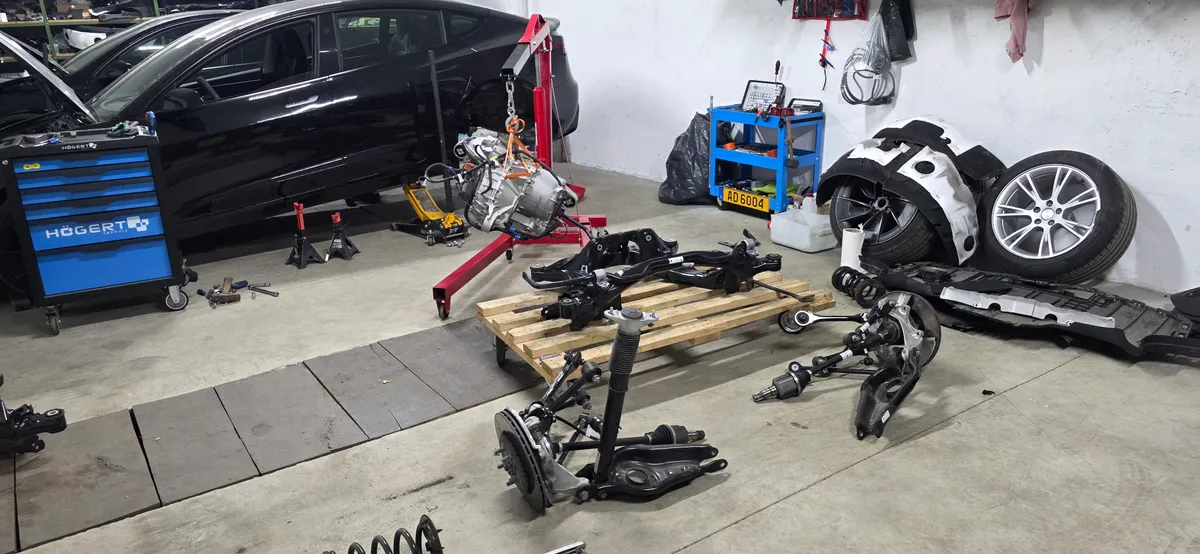
Tools and parts to check
Match the tool or part to your vehicle and the procedure before ordering. Search links show listings, not a verified fit. Check the seller's specifications, delivery region and current price.
- Tesla Cabin Air Filter (Model 3/Y)
- Tesla Cabin Air Filter (Model 3/Y)
- Brake Fluid DOT 4 (1L)
- G-48 Coolant (4L)
- iFixit Pro Tech Toolkit
- OBDLink CX Bluetooth Scanner
- Brake Fluid Tester Strips
- Torque Wrench 20–110 Nm
- Tesla Jack Pad Adapters (Silicone)
- Digital Tire Pressure Gauge
Some links earn a commission from qualifying purchases. Storefront availability and compatibility vary.