Tesla Drive Unit Noise Fix: Whining & Humming
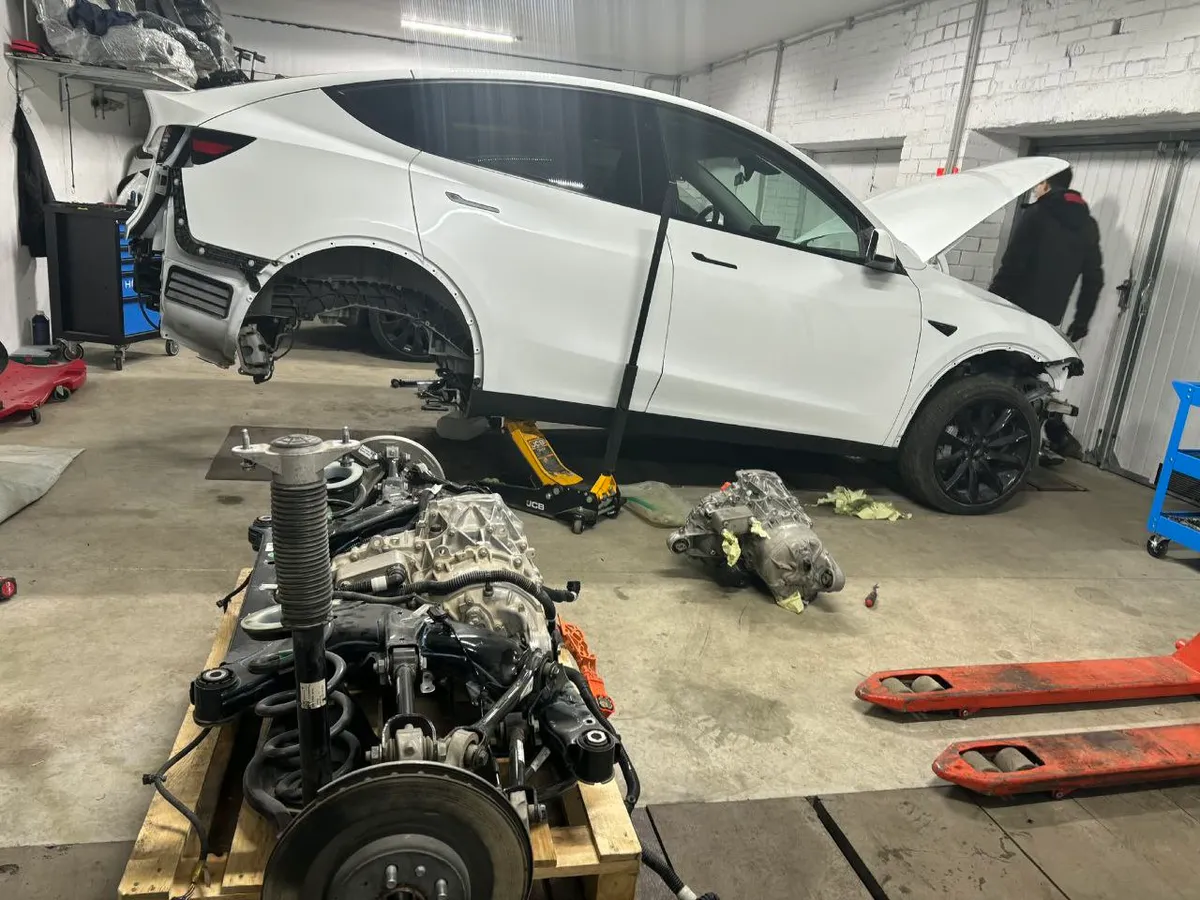
A whining, humming, or grinding noise from your Tesla's drive unit is a common concern, especially at higher mileages. The good news: in many cases, a simple gearbox fluid change can dramatically reduce or eliminate the noise. Tesla drive units use a single-speed reduction gear, and over time the fluid degrades, leading to increased gear noise.
Identifying Drive Unit Noise
What it sounds like:
- High-pitched whine that increases with speed
- Humming or droning at highway speeds
- Grinding or growling during acceleration or deceleration
When to worry:
- Noise that suddenly gets louder
- Vibration accompanying the noise
- Metallic grinding or clunking sounds (this may indicate bearing failure - see a professional)
What You'll Need
Time Required: 1-2 hours Skill Level: Intermediate
Fluid to Buy:
Tesla uses ATF-9 (P/N 1135241-00-A) for 3DU drive units up to Model Year 2023. For MY2024+, use KAF1 (P/N 1646886-02-A). KAF1/KAF1 V1.2 are backwards compatible and can substitute ATF-9.
The rear drive unit on Model 3/Y requires 2,100 mL (2.1L) minimum. Tesla recommends filling with 2,300 mL to ensure the oil pump dispenses the full 2.1L without drawing air. The front drive unit requires 1,300 mL (1.3L).
- ATF-9 (P/N 1135241-00-A) - Tesla OEM spec for up to MY2023
- KAF1 (P/N 1646886-02-A) - Tesla spec for MY2024+, backwards compatible with ATF-9
- New crush washers/O-rings for drain and fill plugs (~$5)
See also: Tesla Gear Oil Change for detailed fluid specifications and model-specific capacities.
Cost Comparison
| Option | Parts | Labor | Total |
|---|---|---|---|
| Tesla Service Center | $50-80 | $200-400 | $250-480 |
| Independent Shop | $50-80 | $100-200 | $150-280 |
| DIY | $50-80 | Your time | $50-80 |
Your savings: $100-400
Step-by-Step: Gearbox Fluid Change
Step 1: Prepare the Vehicle
- Drive the car for 10-15 minutes to warm up the fluid (warm fluid drains better)
- Park on a flat surface and enable Jack Mode (Controls > Service > Jack Mode)
- Lift the vehicle and secure on jack stands at proper jack points
- Remove the rear aero shield panel if working on the rear drive unit
Step 2: Locate Drain and Fill Plugs
Rear Drive Unit (Model 3/Y):
- Oil pump bolts (drain method): Bottom of the drive unit housing - EPL10 socket, 2 bolts (5 Nm + 20 degrees)
- Fill plug: Side of the drive unit housing (10mm hex, 15 Nm)
Front Drive Unit (Dual Motor):
- Oil pump bolts (drain method): Bottom of the front drive unit - EPL10 socket
- Fill plug: Side of the unit (15 Nm), with an oil filter nearby
Step 3: Drain the Old Fluid
- Place the drain pan under the drive unit
- Remove the fill plug first (10mm hex) - always open this before draining
- Remove the oil pump (2 bolts, EPL10 socket, 5 Nm + 20 degrees) to drain - fluid will flow out
- Allow fluid to drain completely (5-10 minutes)
- Inspect the old fluid - it should be reddish. Dark brown or metallic particles indicate wear
Step 4: Replace Oil Filter (Front Drive Unit Only)
The front drive unit has an external oil filter:
- Unscrew the old filter (hand-tight, counterclockwise)
- Apply a thin coat of new fluid to the new filter's O-ring
- Install the new filter hand-tight, then tighten to 3 Nm (2.2 ft-lb) + 135 degrees
Step 5: Refill with New Fluid
- Reinstall the oil pump with new O-ring and torque bolts to 5 Nm + 20 degrees (EPL10 socket)
- Using a fluid transfer pump, fill through the fill hole until fluid begins to seep out
- Install the fill plug and torque to 15 Nm (11 ft-lbs)
Step 6: Final Checks
- Wipe down the drive unit to remove any spilled fluid
- Reinstall the aero shield panel
- Lower the vehicle
- Drive for 10-15 minutes and listen for improvement
- Check under the car for any leaks
Torque Specifications Summary
| Fastener | Socket | Torque |
|---|---|---|
| Oil pump bolts (3DU drain method) | EPL10 | 5 Nm (3.7 ft-lb) + 20 degrees |
| Fill plug (rear & front drive units) | 10mm hex | 15 Nm (11 ft-lbs) |
| Oil filter (front drive unit) | - | 3 Nm (2.2 ft-lb) + 135 degrees |
Sources: Tesla Service Manual (service.tesla.com), March 2026
Torque values and fluid specs verified against Tesla Service Manual (service.tesla.com) - March 2026
When a Fluid Change Won't Help
If the noise persists after a fluid change, the issue may be:
- Worn bearings in the drive unit - requires drive unit rebuild or replacement
- Gear tooth wear - typically only on very high-mileage vehicles
- Halfshaft issues - clicking during turns indicates a different problem (see our halfshaft clicking fix)
Drive unit replacement at Tesla costs $5,000-$9,000. A rebuilt unit from a specialist costs $2,000-$4,000. Always try the fluid change first - it's a $50-80 gamble that often pays off.
Related Guides
- Tesla Gear Oil Change - Detailed fluid specifications
- Tesla Halfshaft Clicking Fix - CV joint noise diagnosis
- Tesla Suspension Noise Fix - Other common noises
- Tesla Jack Points & Lifting Guide - Safe lifting procedure
- Tesla Creaking & Rattling Fix - Interior and exterior noise sources
- Tesla Acceleration Issues - When drive unit problems cause power loss
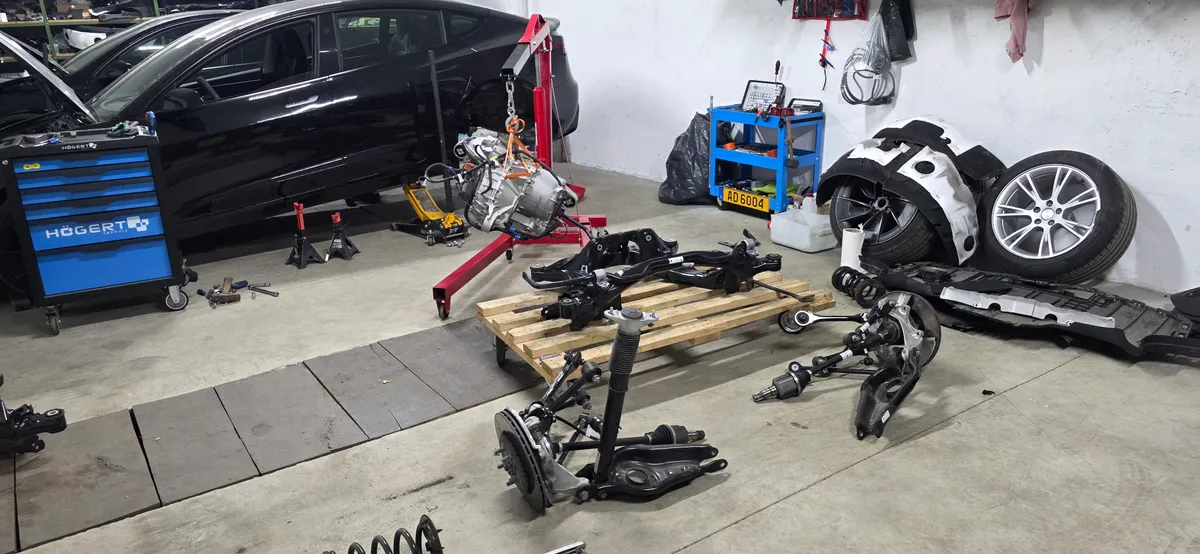
🛠️ Tools Needed for This Repair
These are the tools I personally use and recommend. Using quality tools makes the job easier and safer.
-
Floor Jack (3-Ton)
-
Jack Stands (Set of 4)
-
EPL10 Socket and Hex Socket Set
-
Oil Drain Pan
-
Fluid Transfer Pump
-
Torque Wrench (1/4 inch)
-
iFixit Pro Tech Toolkit View on iFixit
We earn commissions from qualifying purchases through our affiliate partners. This helps support the site at no extra cost to you.