Tesla Brake Fluid Change: DIY Guide to Bleeding & Flushing Your Brakes
Brake fluid is one of the most overlooked maintenance items on any car—including Teslas. Even though your Tesla's regenerative braking means the hydraulic brakes get less use, the fluid still degrades over time. Here's how to change it yourself.
Why Change Brake Fluid?
Brake fluid is hygroscopic—it absorbs moisture from the air over time. This causes two problems:
-
Lower boiling point: Fresh DOT 4 fluid boils at 230°C+ (446°F). Moisture-contaminated fluid can boil at 155°C (311°F) or lower. Boiling brake fluid creates air bubbles, leading to a soft pedal and reduced braking power.
-
Internal corrosion: Water in the brake system causes rust on internal components—calipers, brake lines, and the ABS module.
Even if you rarely use your friction brakes thanks to regen, the fluid is still absorbing moisture and aging.
When to Change Tesla Brake Fluid
Tesla's recommendation: Check brake fluid condition every 4 years using test strips. Flush if contamination is detected (>30 PPM copper content).
Signs it's overdue:
- Brake fluid looks dark brown or black (fresh fluid is clear/amber)
- Soft or spongy brake pedal
- Test strip shows copper content above 30 PPM
- It's been 4+ years since last check
What Brake Fluid Does Tesla Use?
Tesla specifies DOT 4 brake fluid for all models. Do NOT use:
- DOT 3 (lower boiling point)
- DOT 5 (silicone-based, incompatible)
- DOT 5.1 (technically compatible but unnecessary)
Tesla's officially approved fluid:
- BASF Hydraulan 404 DOT 4 (P/N 1012041-10-C) — Tesla's OEM-approved brake fluid
Commonly used alternatives (independent shops):
- Bosch ENV4 - Compatible DOT 4, widely used
- ATE Typ 200 - Popular in Europe, gold-colored
- Motul DOT 4 - Racing-proven, high boiling point
- Castrol React DOT 4 - Widely available
Note: While compatible DOT 4 fluids from reputable brands are commonly used by independent shops, Tesla's officially approved fluid is BASF Hydraulan 404. Using the OEM fluid eliminates any warranty concerns.
You'll need approximately 750 mL for a complete flush (Model 3/Y Non-Performance) or 770 mL (Model 3 Performance). Buy 1L to have extra on hand.
What You'll Need
Time Required: 1-2 hours
Skill Level: Intermediate
Cost: €20-40 for fluid and supplies
Essential:
- 1L DOT 4 brake fluid
- Flare nut wrench set (8-12mm range—size varies by caliper)
- Clear plastic tubing (~30cm per wheel)
- Catch container
- Turkey baster or syringe (to remove old fluid from reservoir)
- Nitrile gloves (brake fluid damages skin and paint)
- Shop towels
Helpful:
- One-person brake bleeder kit (vacuum or pressure type)
- Floor jack and jack stands
- Helper to pump the brake pedal
Preparation
Before starting:
- Park on a flat surface and engage Park
- Clean around the brake fluid reservoir - debris can fall in when you open it
- Open the frunk - the reservoir is located in the front
- Put the car in Jack Mode: Controls → Service → Jack Mode
- Gather all tools and have plenty of fresh fluid ready
Locating the Brake Fluid Reservoir
Model 3/Y: In the frunk, driver's side, near the firewall. Black cap marked "DOT 4 BRAKE FLUID."
Model S/X: In the frunk, driver's side. On Model S, it's partially covered by trim.
Step-by-Step Brake Fluid Flush
Step 1: Remove Old Fluid from Reservoir
- Open the brake fluid reservoir cap
- Use a turkey baster or syringe to extract the old fluid from the reservoir
- Remove as much as possible without letting it run dry
- Dispose of old fluid properly (take to hazardous waste collection)
Do NOT let the reservoir go completely empty during this process—air in the master cylinder creates a massive bleeding headache.
Step 2: Add Fresh Fluid
- Fill the reservoir with fresh DOT 4 fluid to the MAX line
- Keep the bottle handy—you'll need to top up during bleeding
Step 3: Bleeding Sequence
The official Tesla bleeding order is:
- Front Left
- Front Right
- Rear Right
- Rear Left
This sequence is specified in Tesla's service manual and works with how the ABS module cycles the brake fluid. Follow this exact order for best results.
Step 4: Bleed Each Wheel
For each wheel:
- Raise the car and secure on jack stands (or use a lift)
- Remove the wheel for easier access
- Locate the bleeder valve on the brake caliper—it's a small nipple with a rubber cap
- Remove the rubber cap and clean around the valve
- Attach clear tubing to the bleeder valve, with the other end in your catch bottle
- Open the bleeder valve about 1/4 turn with your flare nut wrench
Two-person method:
- Have a helper pump the brake pedal 3-4 times, then hold it down
- While they hold it, crack open the bleeder valve—fluid will squirt out
- Close the valve, then have them pump again
- Repeat until you see only clean, clear fluid with no bubbles
One-person method (vacuum bleeder):
- Attach the vacuum bleeder to the nipple
- Pump to create suction
- Open the bleeder valve slightly
- Watch fluid flow through the tube until clean
- Keep reservoir topped up!
Step 5: Check Fluid Level After Each Wheel
This is critical. After bleeding each corner:
- Check the reservoir level
- Top up to MAX if needed
- Never let it drop below MIN
Step 6: Tighten Bleeder Valves
Bleeder valve torque depends on your caliper manufacturer:
| Caliper Brand | Torque |
|---|---|
| Mando | 10 Nm (7.4 lb-ft) |
| Hitachi | 12 Nm (8.8 lb-ft) |
| Brembo (Performance) | 18.5 Nm (13.6 lb-ft) |
Not sure which calipers you have? Mando and Hitachi are standard on most Model 3/Y. Brembo calipers (usually red or larger) come on Performance models.
Step 7: Final Steps
- Pump the brake pedal several times—it should feel firm
- Check for leaks around all bleeder valves
- Replace bleeder valve caps
- Top up reservoir to between MIN and MAX
- Clean any spilled fluid immediately
- Replace wheels and torque lug nuts
- Exit Jack Mode
- Test drive carefully—brake gently at first to confirm everything works
Troubleshooting
Spongy pedal after bleeding:
- Air is still in the system. Re-bleed starting from the furthest wheel.
- Check that bleeder valves are fully closed.
- Make sure reservoir didn't run dry during bleeding.
Brake pedal goes to floor:
- Air in the master cylinder. You may need to bench bleed or have Tesla service it.
- Very rare if you kept reservoir topped up.
Fluid won't flow from bleeder:
- Bleeder valve may be clogged. Try gentle pressure or careful application of heat.
- Check that reservoir is full.
How Often Should You Do This?
| Condition | Interval |
|---|---|
| Normal use | Check every 4 years, flush if >30 PPM |
| Humid climate | Check every 2-3 years |
| Track use | Flush every year or before track days |
| Very low mileage | Check every 4 years minimum |
Cost Comparison
| Option | Cost |
|---|---|
| DIY (this guide) | €20-40 |
| Tesla Service Center | €150-250+ |
| Independent shop | €80-150 |
Common Questions
Q: Can I just top up the fluid instead of flushing?
A: Topping up doesn't remove contaminated fluid. A proper flush replaces all the old fluid in the lines, calipers, and ABS module.
Q: Do I need to put the car in any special mode?
A: Jack Mode prevents the car from auto-leveling (air suspension models) and going to sleep. Not strictly required for bleeding but recommended.
Q: Will this trigger any warnings?
A: No. Unlike some brake work, a fluid flush doesn't require Tesla software to reset anything.
Q: Can I mix DOT 4 brands?
A: Yes, all DOT 4 fluids are compatible. Mixing is fine.
What About the ABS Module?
A standard 4-corner bleed will replace about 80-90% of the fluid in your system. Some fluid remains in the ABS module and associated lines.
For a complete 100% flush, Tesla uses a scan tool to cycle the ABS valves while bleeding. This is overkill for normal maintenance. The DIY method described here is sufficient for routine 2-year intervals.
Related Guides
- Tesla Brake Pad Replacement - When pads need changing
- Tesla Brake Rotor Replacement - Flush fluid while servicing rotors
- Squeaky Brakes Fix - Noise without pad wear
- Reduced Regen Braking - When regen isn't working
- Model S Rear Caliper Motor Replacement - EPB motor issues on older Model S
- Phantom Braking Fix - Autopilot braking behavior
Have questions about brake fluid changes? Drop them in the comments below.
Verified: Key specifications verified against Tesla Service Manual (service.tesla.com) on March 2, 2026.
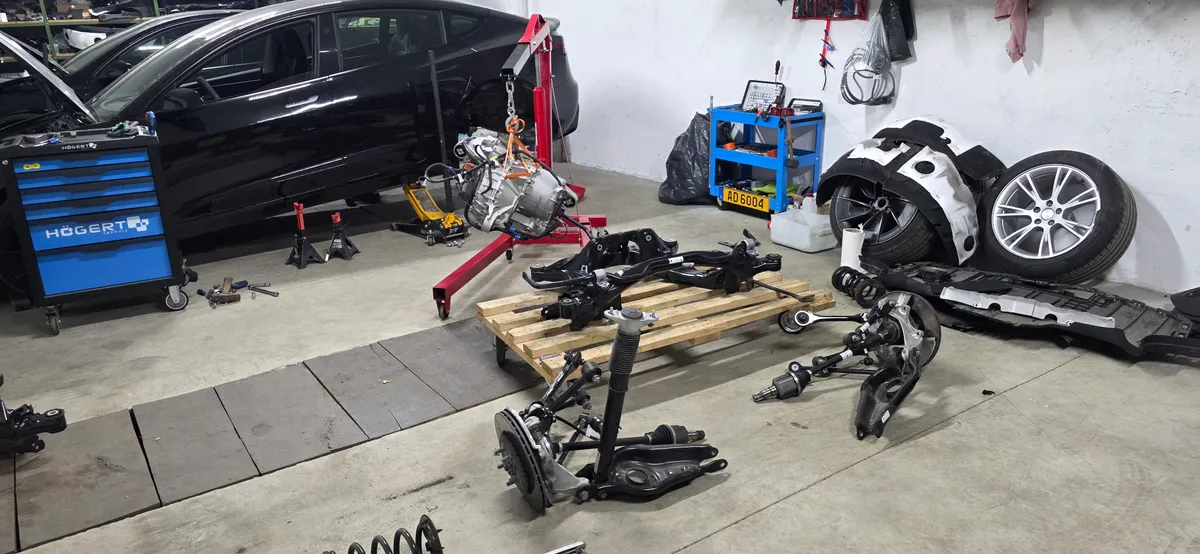
🛠️ Tools Needed for This Repair
These are the tools I personally use and recommend. Using quality tools makes the job easier and safer.
-
DOT 4 Brake Fluid (1L)
-
Brake Bleeder Kit
-
Flare Nut Wrench Set
-
Turkey Baster or Fluid Pump
-
Clear Tubing (6mm ID)
-
Catch Bottle
-
Floor Jack (3-Ton)
-
Jack Stands
-
Nitrile Gloves
We earn commissions from qualifying purchases through our affiliate partners. This helps support the site at no extra cost to you.