Tesla Model Y Juniper Suspension Rattle: Causes, Fixes, and What Tesla Is Doing About It
If you own a 2026 Tesla Model Y Juniper and hear a clunking, rattling, or bobbling noise from the front suspension when driving over bumps — you're not alone. Thousands of owners have reported this issue across Reddit, Tesla Motors Club, and Tesla Owners Online forums, and it's become one of the most discussed quality issues on the refreshed Model Y.
The good news: it's a known issue. Tesla engineering has acknowledged it. The less-good news: there's no single silver-bullet fix yet, and some owners are on their second or third service visit trying to resolve it.
This guide covers every documented cause, which fixes actually work, what Tesla Service will and won't do, and how to get the best outcome if you're dealing with this noise.
What the Noise Sounds Like
Before diving into causes, let's make sure we're talking about the same noise. Juniper owners describe it differently depending on the source:
- Front suspension clunk — a distinct "thunk" or "knock" when hitting bumps at low speeds (20-40 km/h / 15-25 mph). Most common description.
- Bobbling or fluttering — a rapid series of small rattles, almost like something is vibrating loose. Often described as "plastic hitting plastic."
- Rattling at speed — a continuous buzz or rattle on rough road surfaces that goes away on smooth pavement.
- Steering wheel rattle — a vibration felt through the wheel accompanied by a squeak or rattle, particularly over uneven surfaces.
Key diagnostic clue: If the noise is worst at low speeds over small bumps and seems to come from the front, you're almost certainly dealing with the known Juniper suspension issue.
The Known Causes (Ranked by Frequency)
Based on hundreds of owner reports and Tesla Service documentation, here are the confirmed causes — starting with the most common.
1. Front Upper Control Arm (FUCA) Ball Joint — Most Common
This is the #1 culprit across all Tesla Model 3 and Model Y generations, and the Juniper is no exception.
What happens: Water penetrates through the seal between the control arm and the ball joint housing. The grease inside gets displaced by water, corrosion develops, and the ball joint develops play. This creates a clunking noise over bumps and sometimes a creaking noise when turning.
How to confirm:
- Noise is from the front, usually one side louder than the other
- Gets worse over time (progressive)
- Clunking over bumps AND creaking when turning the steering wheel at low speed
- With the car on a lift, you can sometimes feel play in the ball joint by grabbing the wheel at 12 and 6 o'clock and rocking it
The fix: Complete replacement of the front upper control arm. The ball joints are not serviceable — the entire arm must be replaced.
Aftermarket option: Mountain Pass Performance (MPP) offers upgraded front upper control arms with replaceable, weather-sealed ball joints. These are more expensive upfront but the ball joint can be replaced in minutes if it ever wears out, rather than replacing the entire arm again.
2. Sway Bar End Links — Second Most Common
The sway bar end links connect the anti-roll bar to the strut assembly. Over time, the ball joint in the end link develops play and rattles.
What happens: The ball joint wears, creating a clunking noise specifically when going over bumps at speed. This is one of the easiest suspension components to diagnose and replace.
How to confirm:
- Remove one end link at a time and drive the car. If the noise goes away, you've found it.
- The noise is typically a single "clunk" per bump, not a continuous rattle
The fix: Replace the end links. Tesla OEM replacements are cheap and tend to last longer than most aftermarket options. Also check that the end link nuts are properly torqued — loose nuts are a common cause of rattle after any suspension work.
3. Wiper Bracket and Pencil Braces — Juniper-Specific
This is a cause that's unique to the Juniper and catches many owners off guard because it sounds exactly like a suspension noise but isn't coming from the suspension at all.
What happens: The wiper bracket or the "pencil braces" (thin structural supports near the cowl area) vibrate against each other or against the body when the car hits bumps. The noise transmits through the structure and sounds like it's coming from the front suspension.
How to confirm:
- The noise is more of a "bobbling" or "fluttering" than a hard clunk
- It happens on both smooth and rough bumps (not just sharp impacts)
- Adding rubber bushings or foam tape to the wiper bracket area reduces or eliminates the noise
The fix: Adding rubber bushings between the pencil braces and the wiper bracket to dampen the vibration. Some owners have had success with adhesive-backed felt or foam tape. Tesla Service may not recognize this as the source initially — come armed with the information.
4. C-Pillar Trim Rattle — Interior Source
What happens: The C-pillar interior trim panel isn't fully secured, and it rattles against the body structure when driving over bumps. This sounds like it's coming from the rear suspension but is actually an interior trim issue.
How to confirm:
- Sound comes from the rear of the cabin
- Pressing on the C-pillar trim while driving eliminates the noise
- More noticeable with rear passengers or cargo
The fix: Tesla Service can "adjust the interior trim to secure the C-pillar properly," per owner reports. This is a quick fix that typically resolves the issue permanently. You can also DIY by removing the trim panel and adding felt tape to the contact points before refitting.
5. Front Compression Arm (Compliance Link)
What happens: The rubber bushing in the front compression arm (also called the compliance link) tears over time. This causes a crunching or clunking noise, particularly when braking hard or turning at low speeds.
How to confirm:
- Noise when braking, not just over bumps
- You can sometimes hear it turning the steering wheel lock-to-lock while stationary
- Visual inspection shows torn or separated bushing
The fix: Tesla only offers complete arm replacement. Some owners have reported that Tesla replaced the compliance link to address the Juniper rattle, but it was largely ineffective — suggesting the compliance link wasn't the actual source.
6. Front Lower Control Arm Bushing
What happens: The rubber bushing that attaches the front lower control arm to the subframe tears or separates. This creates a crunching or clunking noise under acceleration and braking.
How to confirm:
- Noise primarily when accelerating or braking, not over bumps
- Visual inspection shows separation in the bushing
The fix: Tesla replaces the entire arm. Aftermarket replacement bushings are also available.
The RWD Factor
Several owners and Tesla Service technicians have noted that RWD Juniper models may be more prone to the front suspension noise — or at least it's more noticeable.
The explanation makes sense: without the front drive motor adding weight over the front axle, the front struts operate under less compression. This means they're more likely to chatter or rattle over small bumps because there's less downward force keeping everything tight.
Tesla Service has told some RWD owners that "all RWD Ys make that noise, it's normal." This is not a satisfactory answer if the noise is genuinely from a worn component. Push for inspection, and bring video evidence of the noise.
What Tesla Service Will (and Won't) Do
Based on owner reports, here's what to expect:
What they'll typically do:
- Test drive and confirm the noise (bring them to a road where you can reproduce it)
- Replace FUCA under warranty — this is the standard first response
- Replace sway bar end links — cheap fix they'll often do preventively
- Adjust interior trim — for C-pillar rattle specifically
- Replace compliance link — though this often doesn't fix it
What they might resist:
- "That's normal for the Model Y" — push back if the noise is getting worse or you have video showing it's abnormal
- Driving to a specific road to reproduce it — some Service Centers won't drive more than a few minutes from the facility. Bring video.
- Acknowledging the wiper bracket issue — this is newer and not all technicians are aware of it
How to get the best outcome:
- Record video with audio of the noise. Include the speedometer and identify the road surface.
- Note when it started and whether it's gotten worse.
- Reference the TMC thread — Tesla Motors Club thread "2026 Model Y suspension rattle" has 147+ pages of documented cases. Mention that Tesla engineering has acknowledged the issue.
- Ask for the latest part revision — if they're replacing the FUCA, ask what the current part number revision is. Older revisions have the same ball joint seal issue.
- Document everything — save your Service Center visit notes in the Tesla app. If the fix doesn't work, you want a paper trail.
DIY Diagnosis Guide
If you want to narrow down the source before visiting Service:
Step 1: Identify the Location
Drive 20-40 km/h (15-25 mph) over speed bumps or rough pavement. Have a passenger listen, or use your phone to record audio from different locations in the cabin.
- Front left or right: Likely FUCA, end links, or wiper bracket
- Front center: Could be wiper bracket/pencil braces or dash trim
- Rear: C-pillar trim, rear headrest rattle, or rear traction arms
Step 2: Characterize the Sound
- Single hard clunk per bump: Ball joint (FUCA or end link)
- Rapid flutter/bobble: Wiper bracket or loose trim
- Crunch when turning: Compression arm or lower control arm
- Creak when steering: FUCA ball joint (dry/corroded)
Step 3: Quick Tests
- Press firmly on C-pillar trim while passenger drives over bumps. Noise gone? It's the trim.
- Open the frunk and check for loose items. The bare (uncarpeted) Juniper frunk amplifies any loose objects rattling around.
- Check sway bar end link nuts — if you can safely access them, verify they're torqued properly (you'll need a socket wrench).
Step 4: Jack Test (Advanced)
If you have jack stands and basic tools:
- Safely lift the front of the car on jack stands
- Grab each front wheel at 12 and 6 o'clock — rock it. Any play = ball joint issue
- Grab at 3 and 9 o'clock — rock it. Play here = wheel bearing or tie rod
- Visually inspect control arm bushings for cracking or separation
- Check end link ball joints for play by hand
Parts and Costs
| Component | OEM Part Cost | Labor (Tesla Service) | Warranty? |
|---|---|---|---|
| Front Upper Control Arm (FUCA) | $80-120 per side | $150-300 | Usually yes |
| Sway Bar End Links | $15-30 per pair | $50-100 | Sometimes |
| Compliance Link | $60-90 per side | $150-250 | Usually yes |
| C-Pillar Trim Adjustment | $0 | $0-75 | Yes |
| Wiper Bracket Bushing | $5-10 (DIY rubber) | N/A | Not standard |
| MPP Upgraded FUCA | $400-500 per pair | $150-300 | Aftermarket warranty |
When to Worry
Most Juniper suspension rattles are annoying but not dangerous. However, seek immediate service if you notice:
- Clunking combined with steering wandering — this suggests significant ball joint play that affects vehicle control
- Uneven tire wear — worn suspension components cause alignment issues
- Noise gets dramatically worse suddenly — a component may be close to failure
- Visible damage — cracked or separated bushings visible during inspection
- Noise while braking — front compression arm failure can affect braking feel
The Bottom Line
The 2026 Model Y Juniper suspension rattle is a well-documented, widely-acknowledged issue that affects both AWD and RWD variants. Tesla engineering is aware of it and working on revised parts. In the meantime:
- Don't ignore it — rattles tend to get worse, not better
- Document with video before visiting Service
- Start with the FUCA and end links — these are the most common culprits
- Check the wiper bracket — this Juniper-specific cause is often overlooked
- Push for warranty coverage — this should be covered under your new vehicle warranty
- Consider aftermarket FUCA if you're on your second or third OEM replacement
If you're considering buying a Juniper, don't let this scare you off. It's a real issue, but it's fixable, and Tesla is working on it. Just factor in a potential Service Center visit in your first few months of ownership.
Sources
- Tesla Motors Club: 2026 Model Y suspension rattle (147+ pages) — ongoing since April 2025
- Tesla Motors Club: 2026 Model Y Front Suspension Noise — September 2025
- Reddit r/TeslaModelY: Known issue with suspension clunk — March 2026
- Reddit r/TeslaLounge: Juniper RWD front strut noise — September 2025
- Mountain Pass Performance: Diagnosing Tesla Model 3/Y Suspension Noises — comprehensive technical guide
- YouTube: The 2026 Model Y Juniper Has a MAJOR Defect (Suspension Rattle) — February 2026
- Tesla Owners Online: Clunking over minor bumps at low speeds
- Tesla Service Center reports from multiple owner accounts
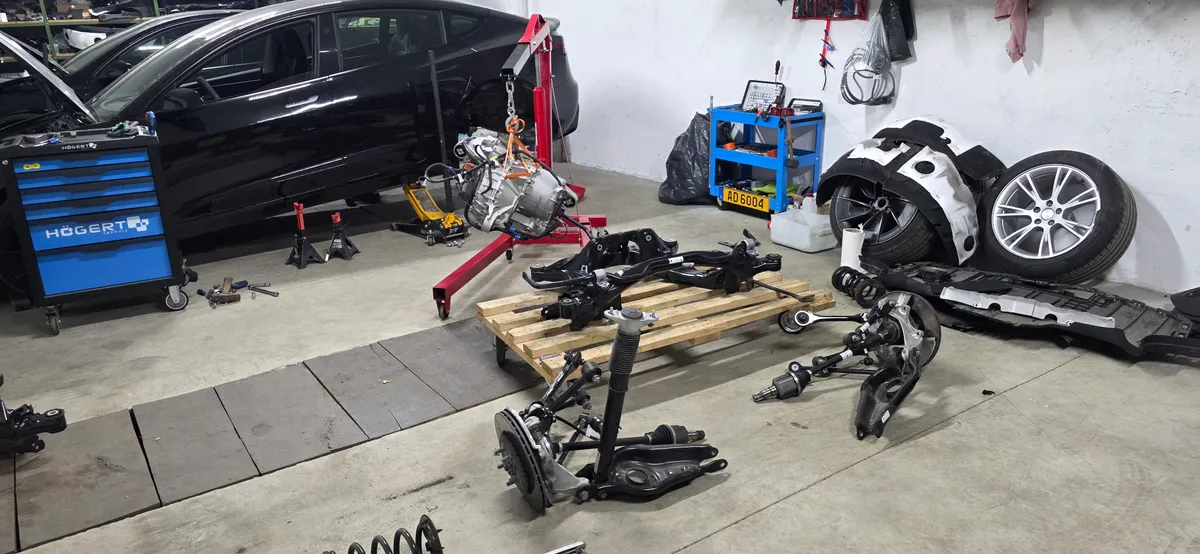
🛠️ Tools Needed for This Repair
These are the tools I personally use and recommend. Using quality tools makes the job easier and safer.
-
Tesla Model Y Floor Mats (Juniper 2026)
-
Mechanic's Stethoscope
-
Trim Removal Tool Kit
We earn commissions from qualifying purchases through our affiliate partners. This helps support the site at no extra cost to you.