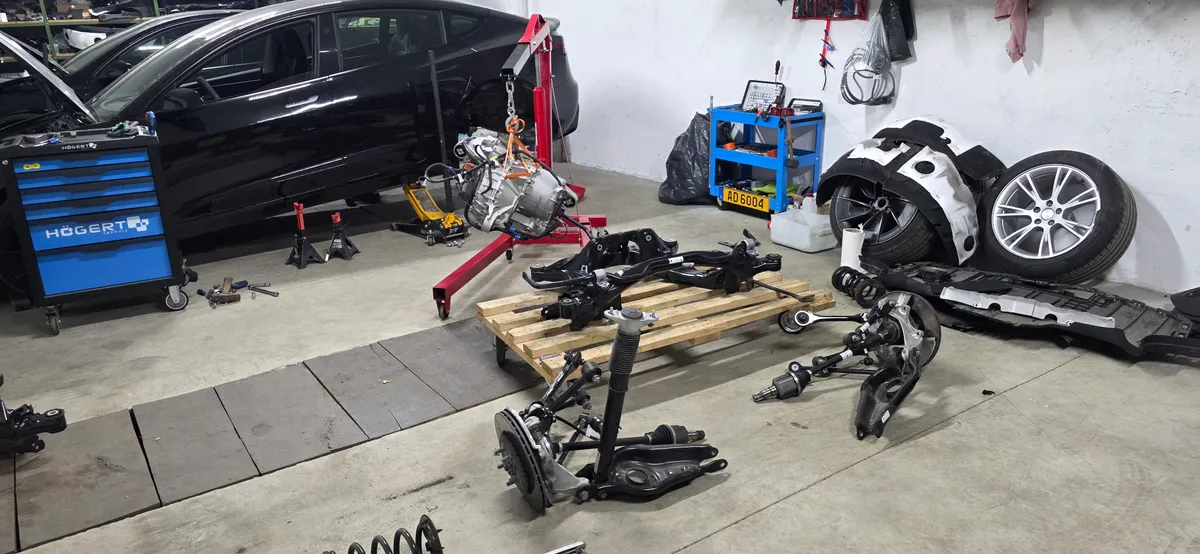
Model Y Compressor Not Running: An HV Fuse Repair Case
Some links are affiliate links. As an Amazon Associate I earn from qualifying purchases. Check vehicle compatibility before buying. How recommendations work.
A Model Y Juniper's air-conditioning compressor would not run. During the repair, a damaged high-voltage cable and an open 63 A fuse were identified. After the cable and fuse work, the compressor ran, commissioning passed, and cabin cooling and heating were checked successfully.
This is a single workshop case contributed by this site's mechanic. The account below draws on his repair notes, original photographs and follow-up confirmation of the fuse measurement and functional checks. It explains what the evidence supports and what another repairer would still need to establish on a different vehicle.
The Starting Point: A Compressor That Would Not Run
The initial question was whether refrigerant pressure was preventing compressor operation. Work had already included connector inspection and replacement of the supermanifold. The mechanic also reported replacing the long HV cable beneath the battery area and identifying damage to that cable.
That repair history mattered: diagnosis needed to include the electrical supply path. The fact that the supermanifold had been replaced did not establish why the compressor still would not run, or whether the old manifold had actually failed.
The useful lesson is to record the work already done before authorizing another component replacement. A compressor that does not rotate is a symptom; identifying the failed part requires more than a refrigerant-pressure reading or a fault name.
The Finding: An Open 63 A Fuse
The mechanic identified the removed fuse during diagnosis and subsequently confirmed that a meter test showed it was open. Its visible markings include RS309-MF, 63 A and DC700V.
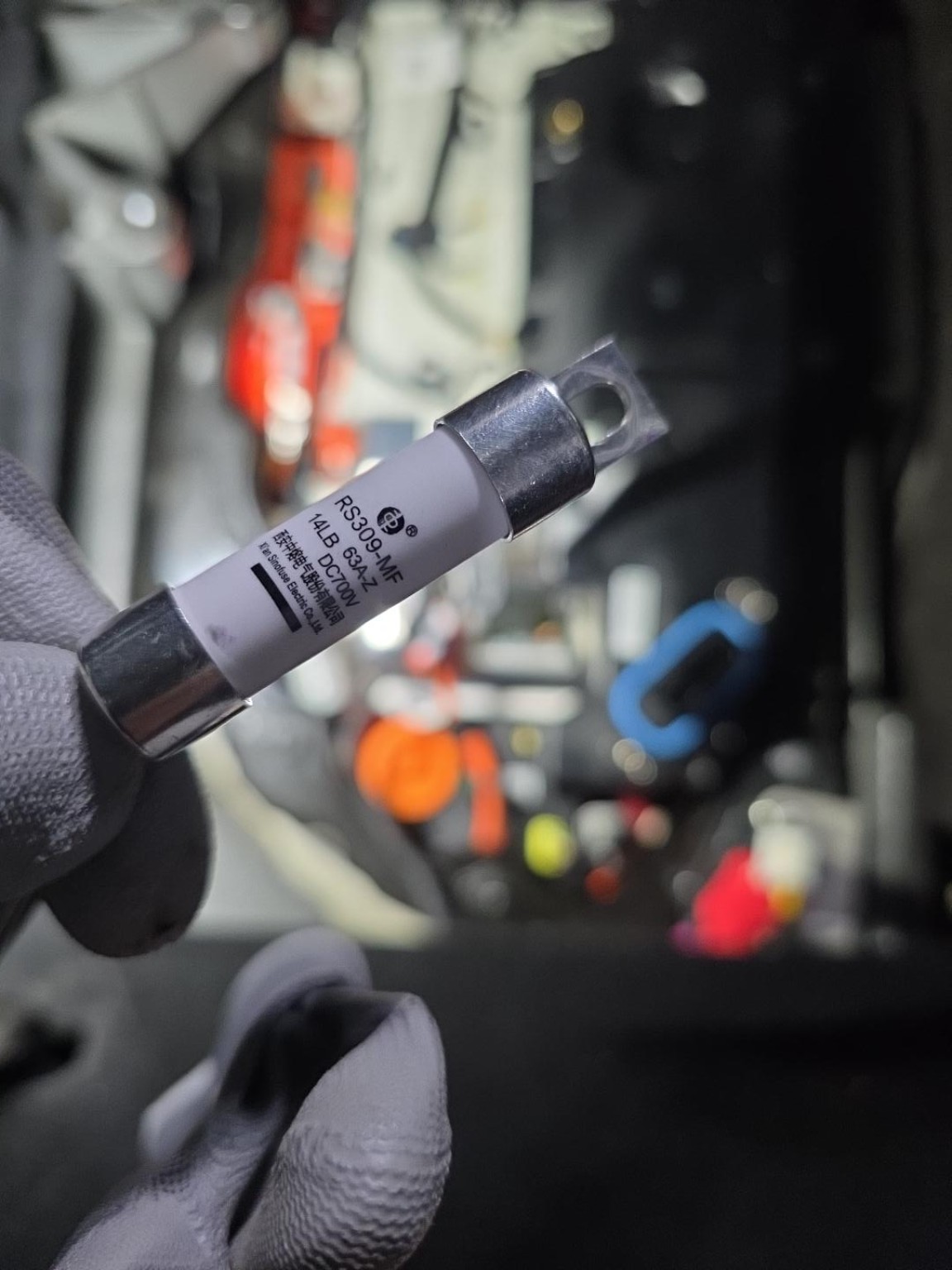
Those markings are not a replacement-part recommendation for every Model Y. Match any replacement to the actual vehicle, circuit and current parts information. A matching current rating alone is not sufficient fitment evidence.
The damaged cable and open fuse make a supply-path fault a well-supported explanation for this case. A short caused by the cable damage is a plausible explanation for the fuse opening, but the case record does not contain measurements that establish the exact failure mechanism. The failed fuse and the reason it failed are separate findings.
What Changed After the Repair
After the reported cable and fuse work, an original diagnostic-screen photograph showed the compressor running. The following values were transcribed from that photograph; the screen itself is withheld because it contains vehicle-identifying information.
| Displayed item | Reading in the post-repair photograph |
|---|---|
| Compressor state | RUNNING |
| Compressor speed | 1,870 RPM |
| Suction | 4 bar / 16°C |
| Discharge | 7 bar / 30°C |
| Liquid | 6 bar / 22°C |
| Ambient temperature shown | 17°C |
These are readings from one operating snapshot, not target pressures for another vehicle. The suction, discharge and liquid temperatures are the displayed refrigerant-system readings, not temperatures measured at the cabin vents. The snapshot documents compressor operation and different pressures; it is not a refrigerant-charge measurement or a complete performance test.
The mechanic additionally confirmed:
- Heat Pump Commissioning: PASS. This is his reported routine result; a separate result-screen photograph was not available for publication.
- Cabin cooling and heating checked successfully after replacement. No numerical vent-temperature record was supplied.
Together, the observed compressor operation and those functional checks support the reported repair result. Long-term recurrence data is not yet part of this case.
Commissioning and Performance Are Separate Checks
Tesla's 2025+ Model Y compressor replacement procedure includes both Heat Pump Commissioning and Test Thermal Performance, with successful completion required for each. That procedure is a useful reference for the distinction; it does not establish which replacement operations were necessary in this particular repair. Official Tesla procedure.
Here, commissioning and cabin heating/cooling were confirmed. A result from the separate named thermal-performance routine was not documented. A professional completion record should identify the routines required by the actual repair procedure and record their results alongside the original symptom check.
Other vehicle alerts remained while the vehicle was still partly disassembled. Restored air conditioning does not establish that unrelated restraint, lighting or other systems are ready for use; those need their own completion checks.
What to Ask If Your Compressor Will Not Run
Use this case to improve the diagnostic conversation with your repairer, rather than to choose a fuse or order a compressor.
| Question for the repairer | Useful evidence to request |
|---|---|
| What is the exact symptom? | Whether the compressor runs, which cabin function fails, and under what conditions |
| What work or damage preceded the fault? | Cable damage, previous component changes and the sequence of symptoms |
| Has the compressor's supply path been assessed? | The technician's documented findings using the correct HV procedure |
| If a fuse failed, what else was found? | Confirmation of the failed fuse and investigation of the underlying cause |
| What proves the repair worked? | Required service-routine results, restored operation, cabin heating/cooling checks and relevant alert review |
Tesla's 2025+ Model Y ancillary HV harness procedure documents the compressor connection within that harness work. It provides context for investigating the supply path; it does not identify the correct fuse or prove the cause of this case from a part photograph.
The transferable lesson: include repair history and verified electrical findings in compressor diagnosis. In this case, an open fuse was confirmed and operation returned after the cable and fuse work. That is useful evidence for this repair, not a universal “replace this fuse” fix for Tesla air-conditioning faults.
Browse the HVAC repair guides for other climate symptoms. Official sources above were checked on September 22, 2026.