Tesla Acceleration Issues: Power Loss, Reduced Performance & Fixes
Few things are more alarming than pressing the accelerator in your Tesla and feeling... nothing much happening. Whether it's a "Power reduced" warning on the screen, a sluggish takeoff from a stop light, or a sudden loss of power on the highway, acceleration problems demand immediate attention.
This guide covers every common cause of Tesla acceleration issues, from simple fixes you can handle at home to problems that need professional service.
Common Warning Messages
Before diving into causes, here's what your Tesla might be telling you:
- "Power has been reduced" — the car has intentionally limited motor output
- "Vehicle power is limited" — similar to above, often thermal-related
- "Performance limited — regenerative braking disabled" — multiple systems affected
- "Acceleration has been reduced" — specific motor output cap in effect
- Tortoise icon — the car is in limp mode with severely reduced power
Each message points to different root causes, but the troubleshooting approach is similar.
Quick Diagnosis: Is It Urgent?
Pull over safely and call roadside assistance if:
- The car decelerates on its own while driving
- You see multiple red warning lights simultaneously
- There's an unusual smell (burning, chemical) from the car
- The steering becomes heavy or unresponsive alongside power loss
Can be diagnosed at home if:
- Power is reduced but the car still drives normally
- The issue comes and goes with temperature or charge level
- You only notice it during hard acceleration
- The warning appeared during extreme weather
Causes and Solutions
1. Battery Temperature Too High or Too Low
This is the most common cause of reduced acceleration, especially in extreme weather.
Cold battery (below 10°C / 50°F):
- The battery can't deliver full power until it warms up
- You'll see the snowflake icon and dotted power bar
- Acceleration gradually improves as you drive
Hot battery (above 45°C / 113°F):
- Aggressive driving, Supercharging, or hot climate can overheat the battery
- The car reduces power to protect battery cells from damage
- Usually resolves after 15-30 minutes of gentle driving or parking
Fix:
- Cold weather: Use Scheduled Departure to precondition the battery. Set it 30-45 minutes before you leave. The car warms the battery while still plugged in.
- Hot weather: Park in shade when possible. Avoid back-to-back Supercharging sessions. Let the car cool before pushing hard.
- Year-round: Precondition before highway on-ramps where you need full power.
2. Low State of Charge
Below 20% battery, your Tesla starts reducing available power. Below 10%, it reduces more aggressively. Below 5%, you're essentially in limp mode.
This is by design — the car prioritizes getting you to a charger over raw performance.
Fix:
- Charge above 20% for normal acceleration
- Keep above 50% if you need full performance (Track Mode, spirited driving)
- Don't regularly run below 10% — it's bad for battery longevity too
3. 12V Battery Problems
The small 12V battery powers your Tesla's computers, contactors, and control systems. When it's failing, the car may limit power as a precaution — even though the main high-voltage battery is fine.
Symptoms:
- Random power reduction warnings
- Car feels sluggish after sitting overnight
- Other electrical oddities (slow screen, flickering lights)
- "12V battery requires service" warning
Fix:
- Check 12V battery health via an OBD2 scanner
- Pre-2021 models have lead-acid 12V batteries that last 3-5 years
- 2021+ models have lithium 12V batteries that last longer but can still fail
- Replace the 12V battery — it's a 15-minute DIY job on most models
4. Drive Unit Overheating
Sustained high-speed driving, repeated launches, or towing can overheat the drive unit (motor + inverter). The car reduces power to prevent damage.
Symptoms:
- Power reduces after spirited driving or track use
- More common in hot weather
- Power returns after cooling down
- May see "Drive unit power limited" message
Fix:
- Let the car rest for 20-30 minutes
- Avoid repeated 0-100 launches in quick succession
- On track days, take cool-down laps between hard sessions
- Check that your coolant system is healthy — low coolant means less cooling capacity
- If it happens during normal driving, the coolant pump or superbottle may be failing
5. Faulty High-Voltage Contactor
The main battery contactors connect the high-voltage battery to the drive unit. If a contactor is failing or has high resistance, the car may limit power.
Symptoms:
- Intermittent power reduction, especially under load
- Clicking sounds from under the rear seat when you start the car
- Power reduction that seems random and not tied to temperature
- Error codes related to HV battery isolation
Fix:
- This requires Tesla Service or a qualified EV technician
- Contactor replacement typically costs €800-€1,500
- Not a DIY job — involves high-voltage components
6. Motor or Inverter Issues
The electric motor and inverter are incredibly reliable, but they can develop problems over time, especially in high-mileage vehicles.
Symptoms:
- Grinding or whining noise during acceleration (beyond normal drive unit noise)
- Vibration felt through the accelerator pedal
- Inconsistent power delivery — surging or hesitation
- Error codes referencing the drive unit
Fix:
- Run full diagnostics with an OBD2 scanner (Scan My Tesla app recommended)
- Drive unit replacement is covered under the 8-year / 192,000 km (120,000 mile) drivetrain warranty
- If out of warranty, rebuilt drive units cost €3,000-€6,000 depending on the model
- Check your gear oil — unusual noises could be a lubrication problem before it becomes a motor problem
7. Software Glitch
Sometimes the car's computers get confused. A software glitch can trigger false power limitation warnings or actually reduce power unnecessarily.
Symptoms:
- Power reduction appeared suddenly with no clear cause
- The car was fine yesterday, slow today
- Warning messages that don't match the conditions (e.g., thermal warning in cold weather)
Fix:
- Soft reboot: Hold both scroll wheels on the steering wheel for 10 seconds until the screen goes black. Release and wait for it to restart. This fixes most software glitches.
- Hard reboot: If the soft reboot doesn't help, turn off the car from Controls > Safety > Power Off. Wait 3 minutes without touching anything (including door handles). Then press the brake to restart.
- Check for updates: Go to Controls > Software. Install any pending updates — Tesla frequently fixes power management bugs.
- If the problem persists after rebooting, it's likely a hardware issue, not software.
8. Accelerator Pedal Sensor
Rare, but the accelerator pedal position sensor can degrade or fail, causing the car to misread your input.
Symptoms:
- Delayed or inconsistent response to pedal input
- Car accelerates differently at the same pedal position
- Jerky acceleration, especially at low speeds
- No warning messages (the car doesn't always detect a degraded sensor)
Fix:
- Tesla Service can diagnose this with their toolbox
- Pedal assembly replacement: €200-€400 including labor
- Not typically a DIY repair, but some experienced owners have done it
9. Tire and Traction Issues
Sometimes what feels like a power problem is actually a traction problem. If your tires are worn, underinflated, or mismatched, the car's traction control system limits power to prevent wheel spin.
Symptoms:
- "Traction control active" light flashes during acceleration
- Power feels limited only on wet, icy, or gravel roads
- Uneven power between front and rear motors (dual motor)
- The car pulls to one side under hard acceleration
Fix:
- Check tire pressure — underinflated tires reduce grip
- Inspect tire tread depth — replace tires below 3mm
- Make sure all four tires are the same brand and size (mismatched tires confuse traction control)
- Get a wheel alignment if the car pulls to one side
- Rotate your tires regularly — rear tires wear faster on RWD and AWD Teslas
10. Charging System Issues
If your Tesla isn't charging properly, you might start a drive with less power than expected.
Symptoms:
- Battery shows lower charge than expected
- Charging stops early or charges slowly
- Power reduction appears shortly after unplugging
Fix:
- Check your charging cable and connections
- If using a home charger, verify the Wall Connector installation
- Clean the charge port contacts — corrosion can limit charging power
- If the issue started after a Supercharging session, a slow charge overnight may help the battery management system recalibrate
Diagnosing With an OBD2 Scanner
For any persistent acceleration issue, an OBD2 scanner is invaluable. Here's what to look for:
Recommended setup:
- OBDLink CX or LX adapter
- Scan My Tesla app (iOS/Android)
Key readings to check:
- Battery pack temperature — should be 20-35°C during normal driving
- Cell voltage delta — difference between highest and lowest cell. Over 0.1V suggests a problem
- 12V battery voltage — should be 12.8-14.4V (lead-acid) or 15.5-16.8V (lithium)
- Coolant temperatures — front and rear circuits should be within range
- Motor temperature — typically 30-80°C during normal driving
- Inverter temperature — should stay below 80°C in normal conditions
When to Visit Tesla Service
Book a service appointment if:
- Power reduction happens during normal driving in moderate weather
- Rebooting doesn't fix the problem
- You hear unusual sounds along with the power loss
- Warning messages persist across multiple drives
- The car goes into limp mode (tortoise icon) repeatedly
- OBD2 data shows abnormal temperatures or voltages
What to tell them:
- When the problem first started
- Weather conditions when it happens
- Your typical driving pattern (city, highway, distance)
- Whether it's intermittent or constant
- Any OBD2 data logs you've captured
- Screenshots of warning messages
Acceleration Loss by Model
Model 3 / Model Y
- Most common cause: battery temperature (cold climate)
- Second most common: 12V battery degradation (pre-2021 lead-acid)
- Track Mode users: drive unit overheating after repeated launches
Model S / Model X
- More susceptible to drive unit issues (early 2016-2019 units had bearing failures)
- Falcon wing door sensors can occasionally trigger power reduction on Model X (rare)
- Air suspension faults on some models can trigger stability-related power limits
Cybertruck
- Battery pack thermal management is more aggressive due to larger pack
- Towing heavy loads in hot weather can trigger thermal power reduction sooner
- 48V system (instead of 12V) means different diagnostic approach
Prevention Tips
- Precondition before driving — especially in cold weather
- Charge to 80% for daily driving — leaves room for regen and avoids low-charge power limits
- Keep your cooling system healthy — flush coolant on schedule
- Monitor 12V battery health — replace proactively before it causes problems
- Keep tires properly inflated — check monthly
- Install software updates promptly — Tesla continuously improves power management
- Don't ignore early warnings — a brief power reduction today could be a drive unit failure tomorrow
Most Tesla acceleration issues are temporary and related to temperature or charge level. Understanding the causes helps you distinguish between normal behavior and genuine problems that need professional attention.
Related Guides
- Regen Braking Reduced — Often accompanies acceleration limits
- Phantom Battery Drain — Battery issues that affect power delivery
- Drive Unit Noise Fix — When strange sounds accompany power loss
- 12V Battery Replacement — The most common hidden cause
- OBD2 Scanner Guide — Essential tool for diagnosing power issues
- Coolant Flush — Keep thermal management working
- Range Loss Fix — Related efficiency troubleshooting
- Tesla Won't Start — When power loss becomes total failure
- Warning Lights & Error Messages — Decode every Tesla warning
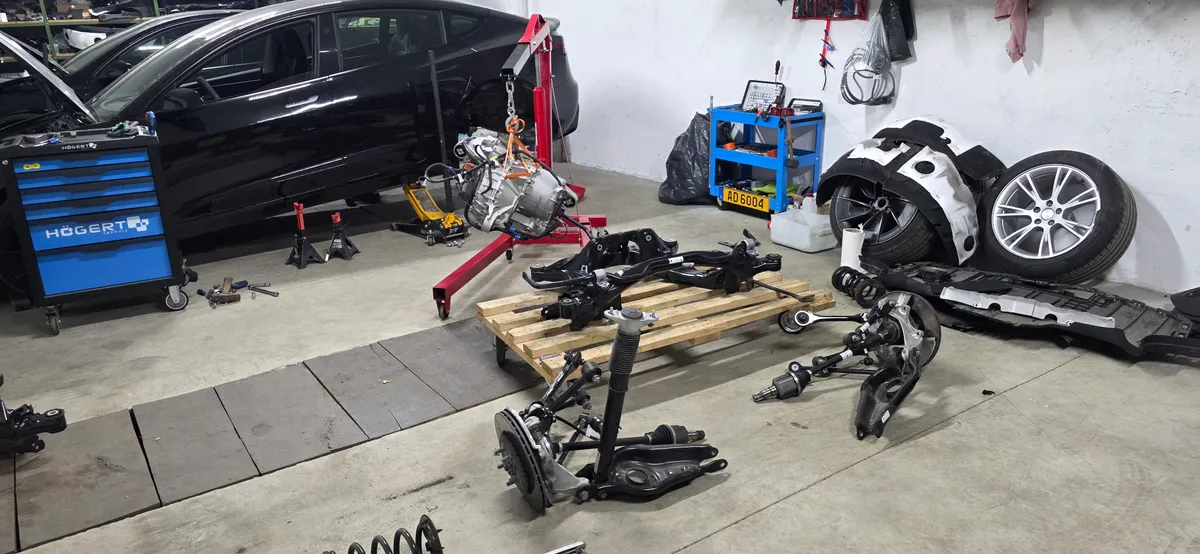
🛠️ Tools Needed for This Repair
These are the tools I personally use and recommend. Using quality tools makes the job easier and safer.
-
OBDLink CX Scanner
-
Lectron Portable EV Charger View on Lectron
We earn commissions from qualifying purchases through our affiliate partners. This helps support the site at no extra cost to you.